
12 Days in Hungary: Top Cities & Historical UNESCO Sites
A 12-day Hungary itinerary for historic cities, castle towns, Baroque squares, Ottoman traces, UNESCO sites, and easy cultural escapes.
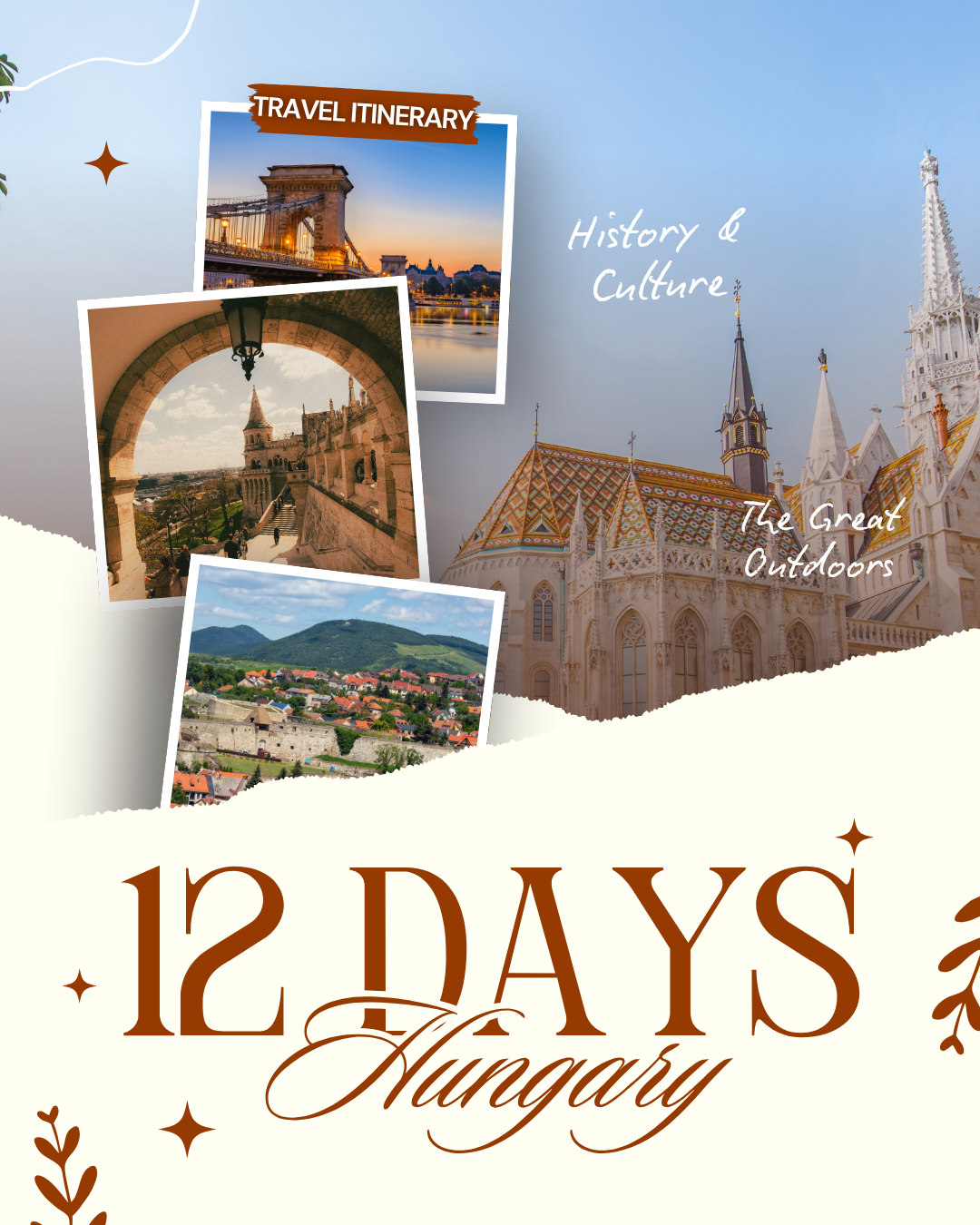
For this 12-day Hungary itinerary, I kept the route cultural, city-focused, and realistic:
Budapest → Danube Bend → Eger → Pécs → Szeged → Sopron → Győr and Pannonhalma
Need help planning your trip? Check out our complete Hungary Travel Guide.
Spring and fall are especially good for this itinerary because you will be walking a lot, and historic stone streets are more charming when they are not radiating August heat directly into your soul.
Hungary is not a one-city country, even though Budapest does make a very persuasive opening argument.
The capital has the Danube, the grand boulevards, the castle views, the Parliament building, and the kind of night skyline that makes everyone suddenly interested in “one more walk.”
But the historical aspects of Hungary get even better once you leave the capital.
This itinerary will give you Hungary’s big historical layers without turning the trip into a museum death march.
You get medieval castle towns, Ottoman leftovers, Roman burial chambers, Baroque centers, Art Nouveau streets, abbeys, river cities, and a few places that make you wonder why everyone only talks about Budapest.
A car makes this itinerary much easier, and tremendously more convenient, especially once you get to Pécs, Szeged, Sopron, and Pannonhalma.
You can do a modified version by train and bus using MÁV for rail and Menetrendek for broader public transport planning; both are useful for checking routes between Hungarian cities.
If you need help planning, check out this guide to Hungary's monthly weather and tourism and this guide to the cheapest and most expensive times to visit Hungary to help you plan when to visit.
Days 1-3 Budapest
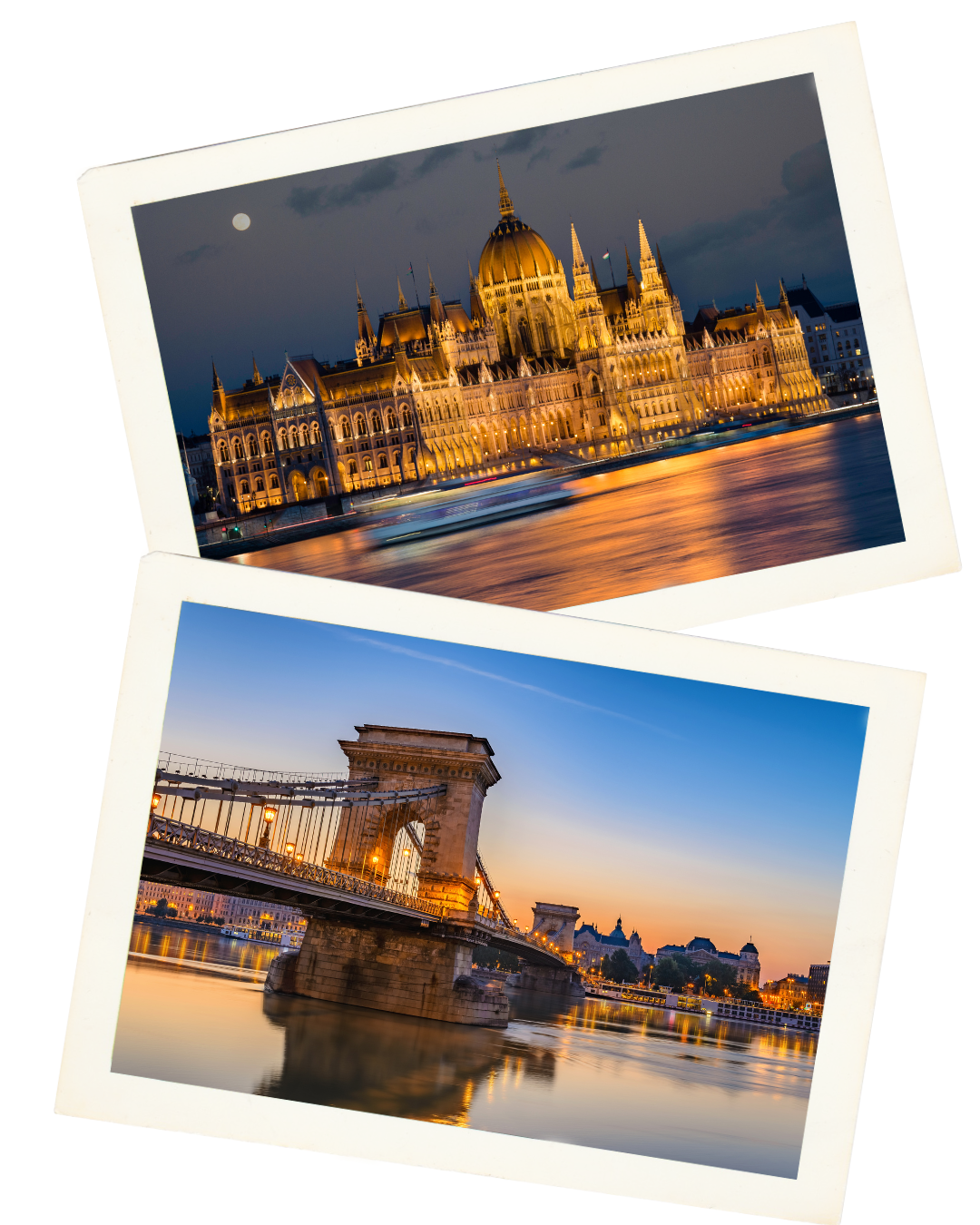
Budapest is the obvious starting point, but obvious does not mean overrated. The city has the theatrical confidence of a capital that knows it looks good from nearly every bridge. UNESCO describes Budapest’s World Heritage area as including the Banks of the Danube, the Buda Castle Quarter, and Andrássy Avenue, calling it one of the world’s outstanding urban landscapes.
Day 1 Itinerary
- Morning:
Start at the Hungarian Parliament Building.
This is the city’s grand opening scene: Gothic Revival drama, Danube views, and enough spires to make restraint look boring. If you want to tour the inside, book ahead through the official Parliament visitor site; official visitor information lists the guided tour at about 45 minutes. - Late morning:
Walk The Danube Promenade and pause at Shoes on the Danube Bank.
The riverfront is beautiful, but this memorial needs quiet. It is one of those Budapest moments where the city’s elegance and its history sit uncomfortably close together. - Lunch:
Stay near central Pest, but walk a few streets back from the river before choosing a place.
The view is expensive, and sometimes the food knows it does not need to try very hard. - Afternoon:
Visit St. Stephen’s Basilica.
It is central, impressive, and easy to pair with a first-day wander through Pest. If the weather is clear, go up to the panorama terrace for a clean introduction to the city’s layout. - Evening:
Have dinner in the Jewish Quarter.
The area is lively, layered, and useful for a first night because you can keep things casual. If you want to peek into a ruin bar afterward, go early before it becomes a human blender of backpackers, bachelor parties, and people shouting “one more drink” with dangerous conviction.
Day 2 Itinerary
- Morning:
Cross to Buda and explore Buda Castle.
This is where Budapest starts acting like a painting. The Castle District works best early, before the big tour groups arrive and everyone begins gently blocking everyone else’s view. - Late morning:
Walk to Fisherman’s Bastion and Matthias Church.
Fisherman’s Bastion is gorgeous and extremely aware of that fact. Go early if you want the softer version. Go later if you are emotionally prepared to share the fairy tale with 600 other people and their phones. - Lunch:
Stay on Castle Hill or walk down toward the Danube.
The most scenic spots can be overpriced, so do not be afraid to drift away from the terrace before committing. - Afternoon:
Visit the Hungarian National Gallery or Budapest History Museum. This is the right kind of itinerary day for one major museum, not five. If you want more ideas later, this guide to the top museums in Hungary is a good companion. - Evening:
Take a Danube night walk.
Budapest after dark is almost unfair. The Parliament glows, the bridges sharpen, and the river gives the city the kind of reflection most of us only get in flattering hotel mirrors.
Day 3 Itinerary
- Morning:
Walk Andrássy Avenue toward Heroes’ Square.
Andrássy Avenue is one of Budapest’s great historical boulevards, and UNESCO’s Budapest listing includes it as part of the city’s World Heritage area. Take your time with the architecture instead of treating it like a sidewalk between attractions. - Late morning:
Visit Heroes’ Square and City Park.
This is a good visual crash course in Hungarian national symbolism, plus a chance to get out of denser streets for a while. - Lunch:
Head back toward Pest or eat near City Park.
Keep the meal practical because the afternoon has heavier historical material. - Afternoon:
Visit the House of Terror Museum.
The museum covers Hungary’s fascist and communist periods, and it is powerful, grim, and not something to sandwich between lighthearted sightseeing like it is just another stop on a checklist. Go, but give yourself breathing room afterward. - Evening:
Keep the night simple.
A slower dinner is better than trying to wring one more attraction out of the city. This is also a good time to check train or driving plans for the Danube Bend.
Day 4 Danube Bend
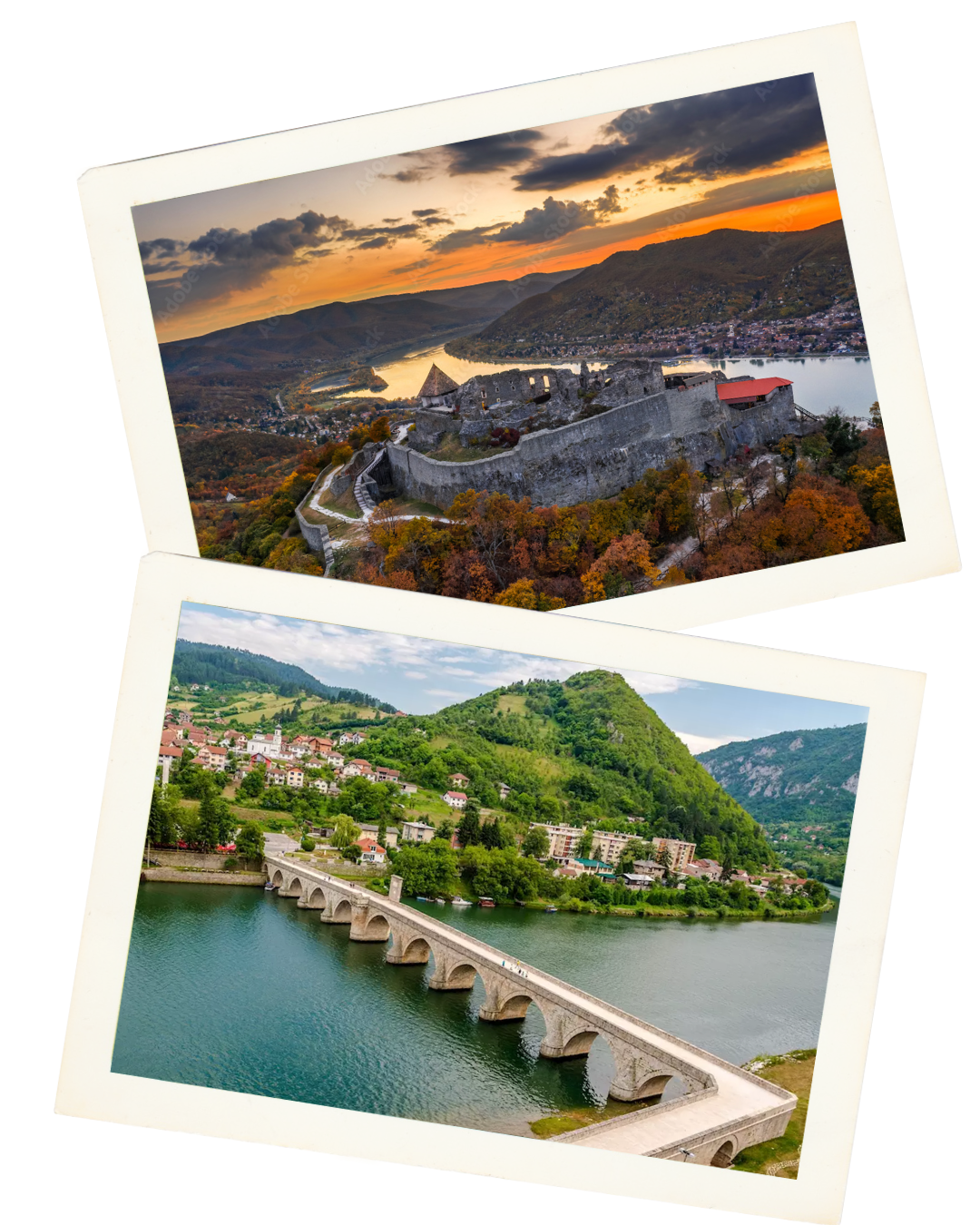
The Danube Bend is the classic Budapest escape: river towns, castle views, church domes, and enough medieval atmosphere to make the day feel bigger than its distance from the capital. With a car, you can see Szentendre, Visegrád, and Esztergom in one long day. Without a car, pick two and protect your sanity.
Day 4 Itinerary
- Morning:
Start in Szentendre.
This is the easiest Danube Bend town to love quickly: cobbled lanes, galleries, churches, colorful façades, and a riverside that lets the whole place exhale. It is pretty, yes, but not secret. Arrive early before the day-trippers fully colonize the pastry counters. - Late morning:
Wander the old town and riverfront.
Szentendre is better when you do not over-plan it. Drift into side streets, look into small courtyards, and accept that your schedule may briefly be defeated by a good café. - Lunch:
Eat in Szentendre or continue toward Visegrád.
If you are driving, keep moving. If using public transport, do not try to force all three Danube Bend towns into one day unless you enjoy making spreadsheets about bus connections. - Afternoon:
Choose Visegrád Castle or Esztergom Basilica.
Visegrád is best for hilltop views and castle atmosphere. Esztergom is better for scale, religious history, and a stronger sense of Hungary’s early statehood. If you have the energy and a car, do both. If not, choose one and enjoy it properly. - Evening:
Return to Budapest or continue toward Eger.
Staying in Budapest makes the day easier. Continuing toward Eger gives you a cleaner start tomorrow. Either works; just do not end the evening pretending a late transfer will be “no big deal” if you are already tired.
Days 5-6 Eger
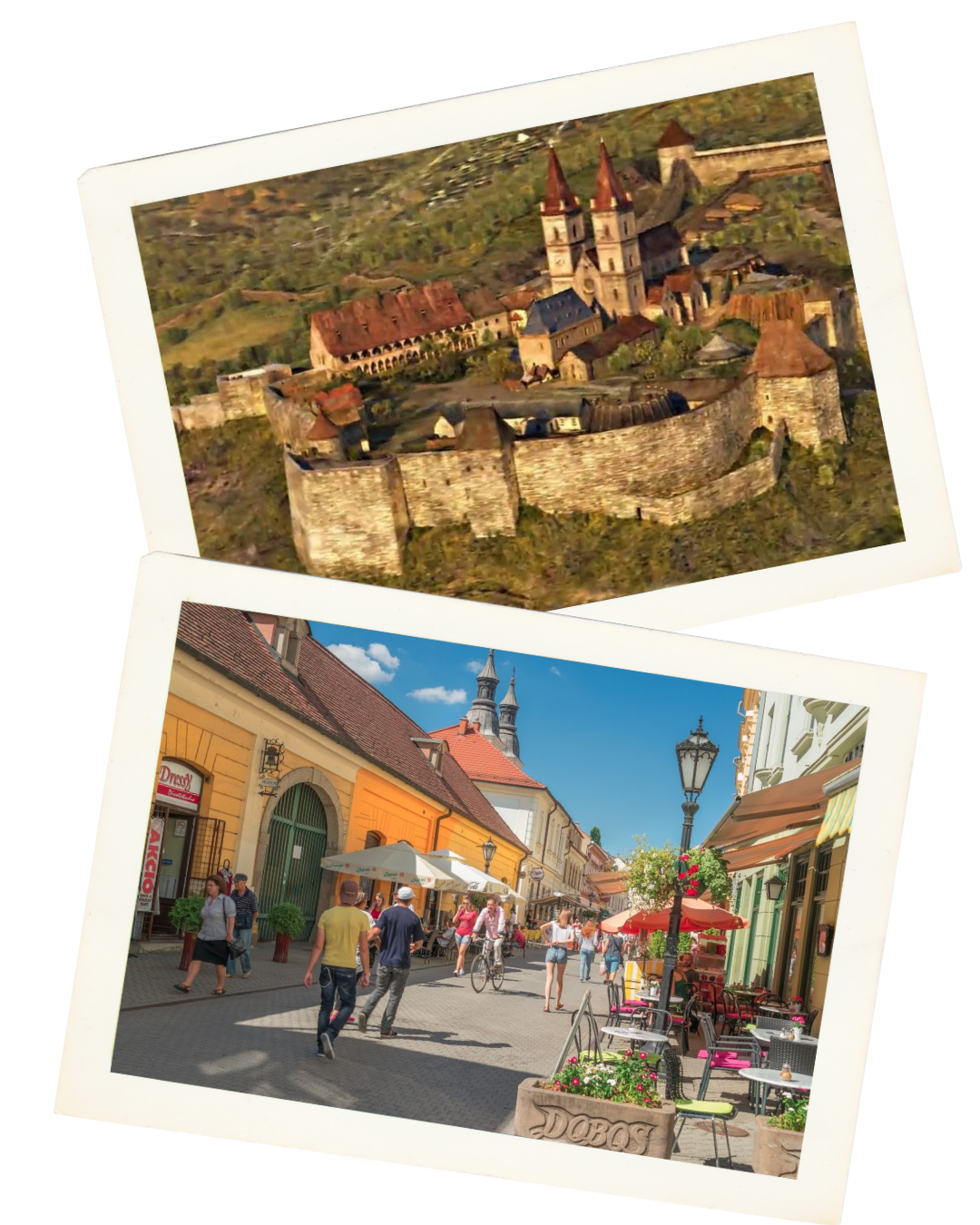
Eger is a historical city with a surprisingly easygoing soul. It has a castle, Baroque streets, Ottoman traces, wine cellars, and the useful quality of being compact enough that you can actually enjoy it instead of simply “covering” it. Visit Hungary highlights the Eger region for its castle, Szépasszony Valley wine cellars, Turkish Bath, and historic center.
Day 5 Itinerary
- Morning:
Travel to Eger.
From Budapest, Eger is manageable by train or car. If you are driving from the Danube Bend, start early enough to avoid turning this into a pure transit day with one sad castle photo at the end. - Late morning:
Begin around Dobó István Square.
This is Eger’s natural starting point: handsome buildings, cafés, and a sense that the town has understood charm for quite a long time. - Lunch:
Eat in the center before heading uphill.
Eger Castle is not Everest, but it is still better visited after lunch than while hangry and dramatic. - Afternoon:
Visit Eger Castle.
Visit Hungary notes that Eger Castle is tied to one of the most ominous events in Hungarian history, and the broader Eger region is strongly associated with medieval fortifications, Ottoman-era history, and wine. Give yourself time for the views over town; they are part of the point. - Evening:
Dinner in the historic center.
Eger after dark is lovely in a quieter way than Budapest. The streets empty out a little, the castle sits above the rooftops, and suddenly staying overnight feels like the correct decision.
Day 6 Itinerary
- Morning:
Visit the Eger Minaret and Basilica.
The minaret is one of Eger’s clearest Ottoman-era reminders, while the Basilica pulls the city back into its grander ecclesiastical side. If you are not fond of narrow climbs, admire the minaret from below and keep your dignity. - Late morning:
Add the Archbishop’s Garden or a café break.
This itinerary has a lot of historic cities, and at some point your brain will stop absorbing dates and start asking for cake. Listen to it. - Lunch:
Eat before wine tasting.
This is practical guidance, not a moral lecture. - Afternoon:
Visit Szépasszony Valley.
Visit Hungary describes the valley as Eger’s well-known wine-cellar area, with almost 200 wine cellars and access from the town center by foot, bus, or city train. It can be cheerful and a little kitschy, but that is part of the fun. Taste slowly; Hungarian pours have a way of becoming persuasive. - Evening:
Stay in Eger for a second night.
The point of two days here is that you do not have to rush the castle, wine valley, and old town into one frantic loop.
Days 7-8 Pécs
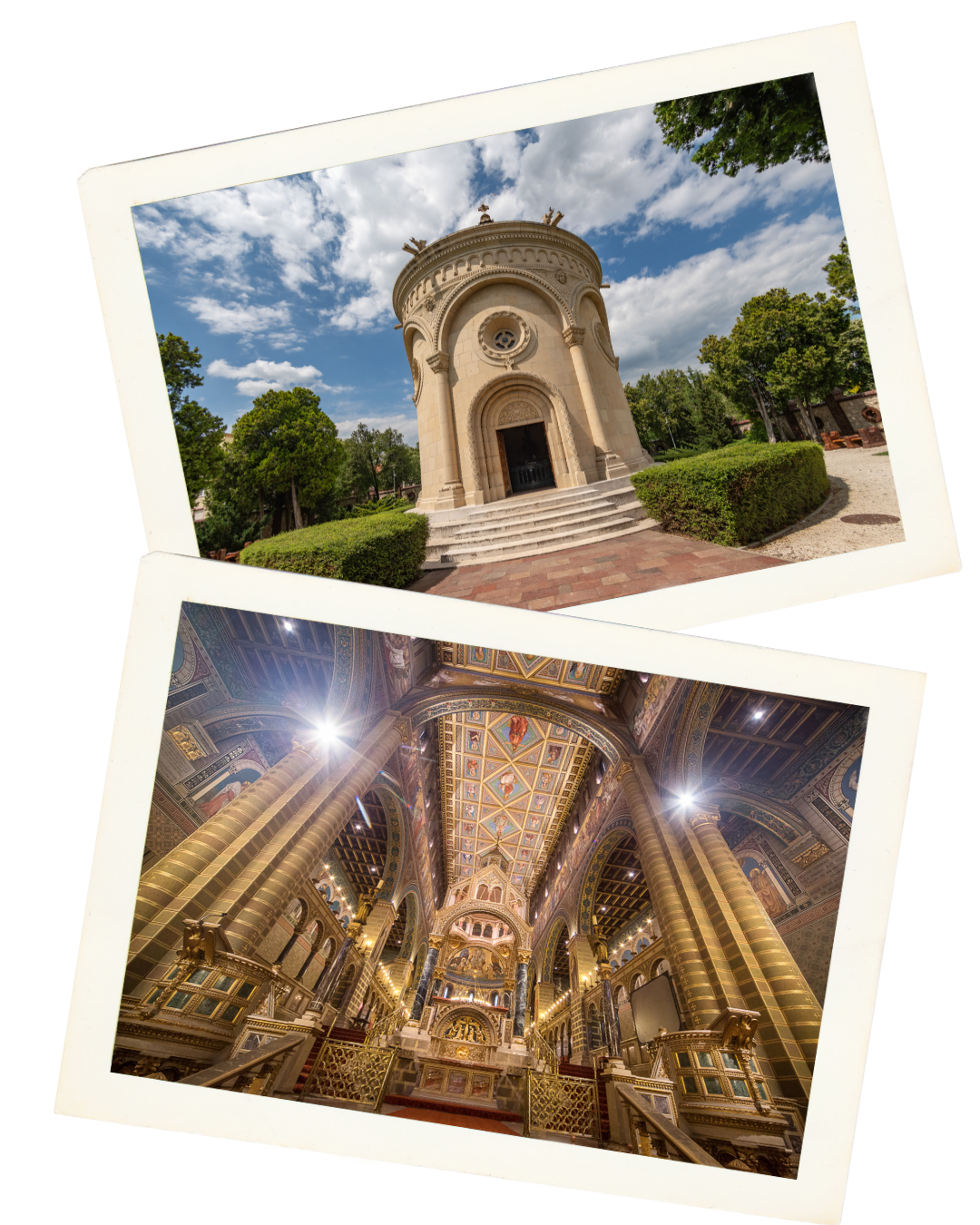
Pécs is one of Hungary’s best historical cities, and it has range: Roman ruins, Ottoman architecture, cathedral towers, Zsolnay ceramics, student energy, and a warm southern feeling that makes the city feel different from Budapest and Eger. It is cultured without being stiff, beautiful without being precious, and underrated in the way that makes travel writers slightly annoying because we keep saying, “No, really, you should go.”
Day 7 Itinerary
- Morning:
Travel to Pécs.
This is a longer transfer, especially from Eger. A car helps. Without one, expect a route that may involve Budapest or careful connections. This is not the day to schedule three timed tickets and a personality transformation. - Afternoon:
Start in Széchenyi Square.
This is the heart of Pécs, and it immediately shows off the city’s layers: Ottoman, Baroque, civic, religious, and café-life all sharing the same stage. - Late afternoon:
See the Mosque of Pasha Qasim from the square.
The former mosque, now a Catholic church, is one of Pécs’s signature historical buildings and a visible reminder of Ottoman-era Hungary. It is also one of those places where “complicated history” is not an abstract phrase; it is built directly into the walls. - Evening:
Walk Király Street and the historic center.
Pécs is excellent for low-pressure wandering. Do not overstuff the first evening. You have arrived; let that count.
Day 8 Itinerary
- Morning:
Visit the Cella Septichora Visitor Centre.
The official World Heritage Pécs ticket page lists the Cella Septichora Visitor Center as part of its heritage ticket system, and the site is tied to Pécs’s Early Christian necropolis. This sounds like it might be dry. It is not. Underground Roman and early Christian history has a way of cutting through travel fatigue. - Late morning:
Visit Pécs Cathedral.
The cathedral area adds another layer of religious and architectural history. Take your time around the square rather than treating it as a photo stop. - Lunch:
Eat near the center.
Pécs rewards sitting down. This is not a city that needs to be attacked with military precision. - Afternoon:
Visit the Zsolnay Cultural Quarter.
The official Zsolnay Quarter site describes the restored 5-hectare area as home to 15 protected historic buildings and 88 public Zsolnay statues, with exhibitions and promenades preserving the Zsolnay heritage. It is colorful, specific, and a welcome change from stone-and-fortress sightseeing. - Evening:
Second night in Pécs.
This is the night to linger. Pécs has a softer pace, and after a week of moving through Hungarian history, that matters.
Day 9 Szeged
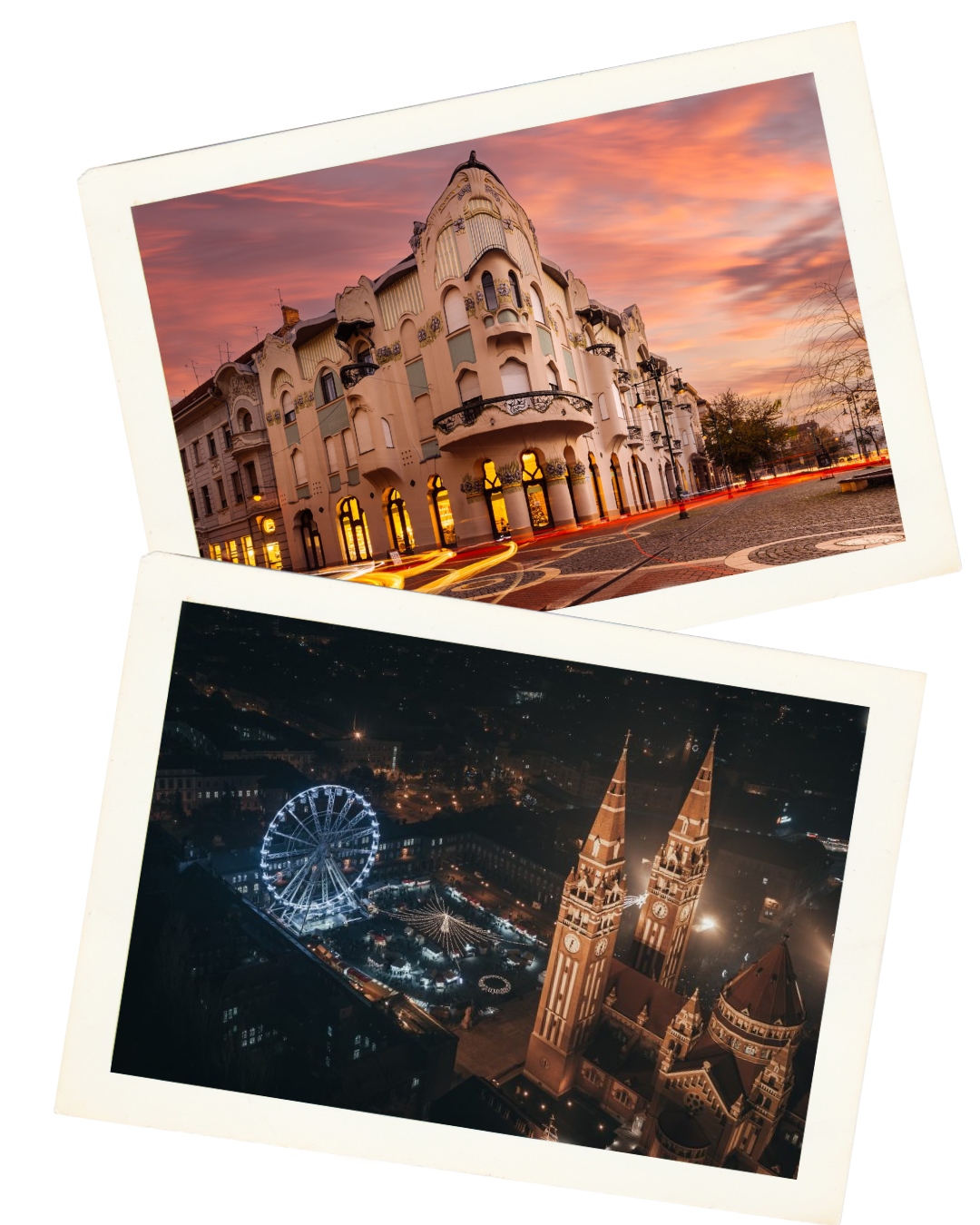
Szeged is the sunny, elegant pivot of the itinerary. It is known for broad squares, riverside air, Art Nouveau architecture, paprika, and a cathedral square that gives the city a clean, theatrical center. It also makes a good contrast to Pécs: less ancient-feeling, more open, brighter around the edges.
Day 9 Itinerary
- Morning:
Travel to Szeged.
From Pécs, this is easiest by car. By public transport, check connections carefully and start early. This is one of those Hungary routes where the map looks innocent, then the timetable has opinions. - Late morning:
Start at Dóm Square and the Votive Church.
Szeged Tourism lists visitor information for the Votive Church and Cathedral Visitor Centre, including opening hours and tower access details. The square is grand but not fussy, and it gives Szeged a strong first impression. - Lunch:
Try Szeged fish soup if you are curious.
This is one of the city’s signature dishes. It is rich, paprika-heavy, and very much not trying to be delicate. - Afternoon:
Walk the Art Nouveau streets and visit Reök Palace or the Móra Ferenc Museum area.
Szeged is good for architecture wandering. The city feels lighter and more spacious than many older Hungarian towns, partly because so much of it was rebuilt after the devastating 1879 flood. - Evening:
Walk by the Tisza River.
After several castle-and-cathedral days, a river walk gives the itinerary a little air. Keep dinner relaxed; tomorrow is a western Hungary transfer.
Days 10-11 Sopron and Győr
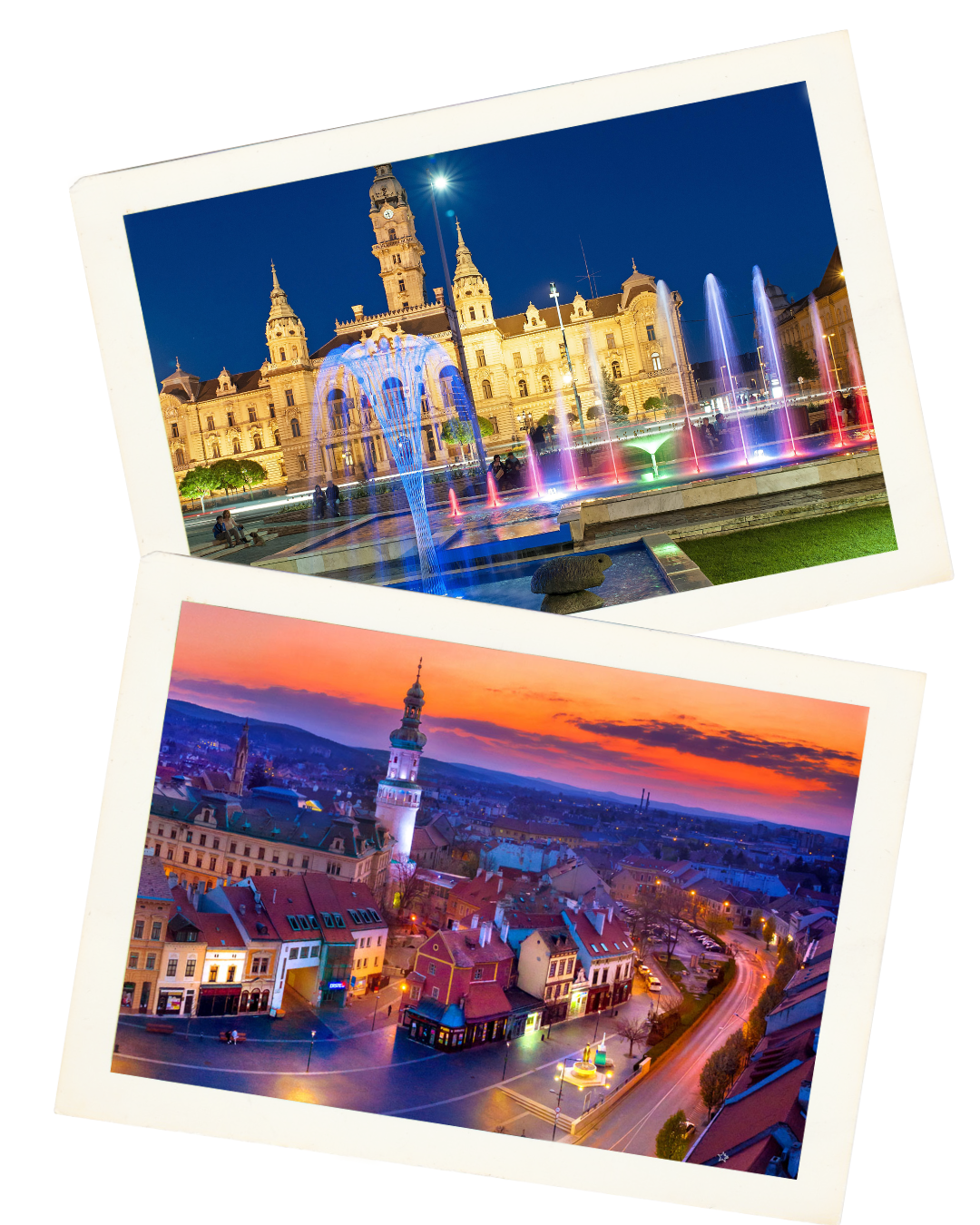
This is where the itinerary swings west. Sopron feels close to Austria in the best possible way: old walls, medieval lanes, Baroque details, and a central square anchored by the Fire Tower. Győr is more polished and river-city elegant, with a handsome Baroque center and easy access to Pannonhalma.
Day 10 Itinerary
- Morning:
Travel to Sopron.
This is a long travel day from Szeged, so leave early. If you want a slower itinerary, skip Szeged and add that night to Sopron or Győr. That is the honest version. - Afternoon:
Explore Sopron’s old town and Fire Tower.
Visit Sopron describes the Fire Tower as the symbol of the town, with Roman foundations, medieval cylindrical sections, Renaissance balcony and clock tower, and a Baroque dome. It is exactly the kind of layered monument this itinerary is built around. - Late afternoon:
Walk the main square and old walls.
Sopron is not a place for rushing. The pleasure is in corners, old façades, plaques, and the feeling that Central Europe has been quietly rearranging itself around this town for centuries. - Evening:
Dinner in Sopron.
After the long transfer, keep the night gentle. The old town gives you enough atmosphere without needing a complicated plan.
Day 11 Itinerary
- Morning:
Travel to Győr.
This is a manageable move, and Győr works beautifully as the final city base. Visit Hungary describes the Győr and Pannonhalma region as rich in natural treasures and monuments, centered on the “city of rivers” and Pannonhalma Abbey. - Late morning:
Explore Győr’s Baroque center.
Start with the main squares, Bishop’s Castle area, and riverside streets. Győr is elegant without being exhausting, which is exactly what you want this late in the trip. - Lunch:
Eat in the old town.
Győr is an easy city for a sit-down lunch because the historic core is compact and pleasant. - Afternoon:
Visit the Cathedral Basilica area and wander the lanes toward the rivers.
This is a good day to slow the pace. You have earned a city that does not demand emotional or logistical heroics from you. - Evening:
Stay in Győr.
Staying overnight makes Day 12 smoother and gives Pannonhalma the time it deserves.
Day 12 Pannonhalma and Return to Budapest
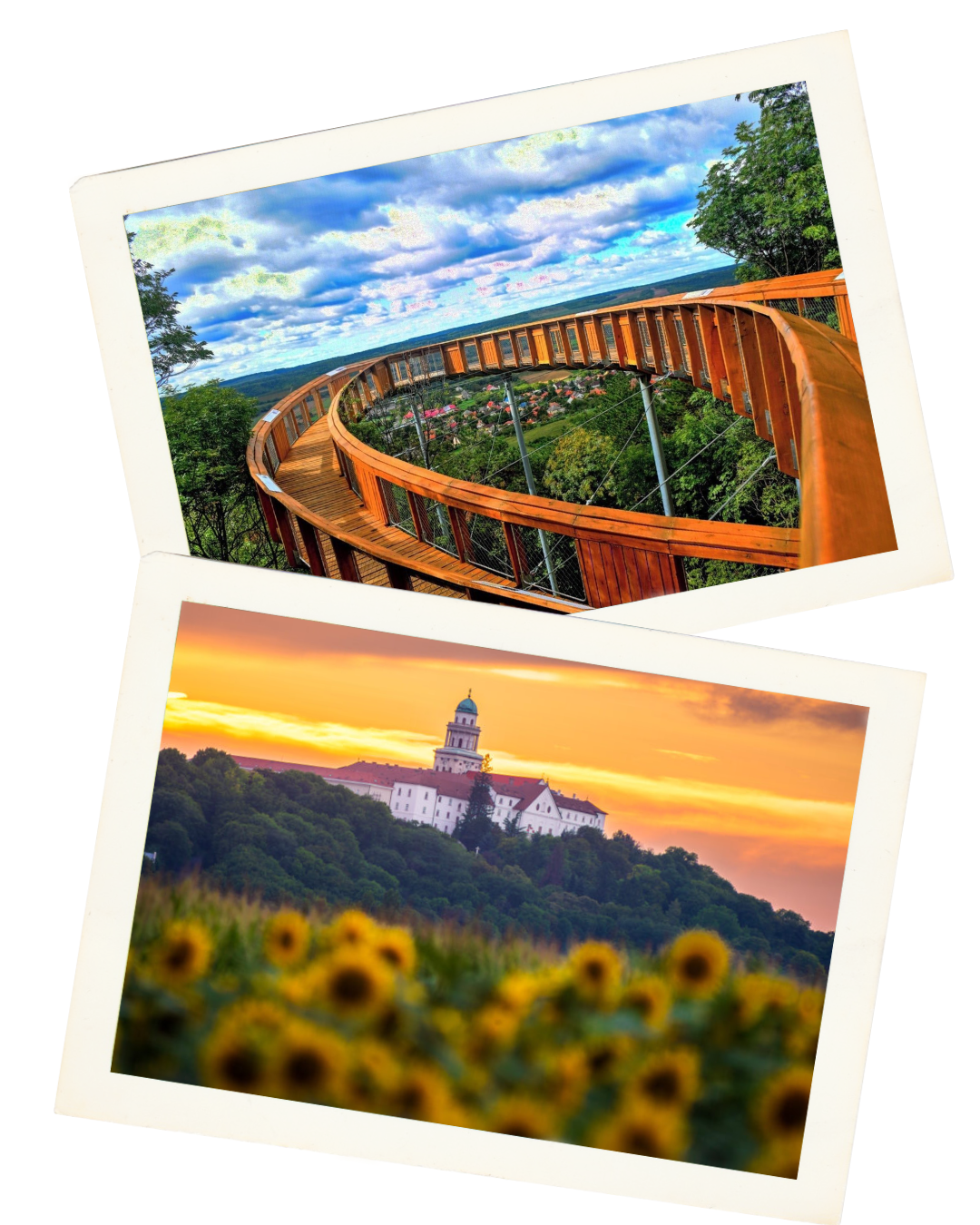
Pannonhalma is the right final historical note: monastic, hilltop, quiet, and deeply rooted. It feels less like a grand finale and more like a thoughtful closing paragraph.
Day 12 Itinerary
- Morning:
Visit Pannonhalma Archabbey.
The official visitor page says individual visitors can tour the Archabbey with an audio guide during opening hours, while English or German guided tours are available by advance booking. UNESCO describes the Benedictine monastery at Pannonhalma as founded in 996 and important in the spread of Christianity in medieval Central Europe. - Late morning:
Take your time with the basilica, library areas, and hilltop setting. Do not rush this stop. The abbey works best when you let it feel different from the busy city centers earlier in the trip. - Lunch:
Eat near Pannonhalma or return to Győr.
Keep timing flexible because opening hours, tours, and religious programs can affect the visit. - Afternoon:
Return to Budapest.
If you fly out the next day, return today. “Close enough to Budapest” is not the same thing as “close enough to the airport,” and that distinction becomes very loud at 5 a.m. - Evening:
Final Budapest dinner or one last Danube walk.
End the trip where it started: by the river, looking at a city that makes a very good case for coming back.
Tips for 12 Days in Hungary
Use Budapest public transport instead of driving in the capital.
BKK lists single tickets, time-based tickets, and 24- and 72-hour travelcards on its official fare page, so check current prices before deciding what makes sense.
Rent a car for the full historical route.
Budapest, Eger, Pécs, Szeged, Győr, and Sopron can be reached by public transport, but linking them smoothly in 12 days is easier by car.
Simplify the route if you dislike long transfers.
The easiest cut is Szeged or Sopron. A slower version would be Budapest, Danube Bend, Eger, Pécs, Győr, and Pannonhalma.
Give Budapest at least three days.
This route is about city escapes, but Budapest has too much historical weight to treat as a one-night arrival point. If you need more ideas, check out the best things to do in Budapest to adjust you Budapest itinerary with other attractions.
Balance museums with street time.
Hungary’s history is not only inside buildings. It is in old squares, riverbanks, castle walls, church towers, and the way Ottoman, Roman, Baroque, Jewish, communist, and modern layers keep overlapping.
Watch the season.
Summer is lively but hot. Winter is atmospheric but darker and colder. Spring and fall are the easiest seasons for a walking-heavy historical itinerary.
If you need more ideas for this trip, check out the top historical and cultural landmarks in Hungary, and the most beautiful sights in Hungary, as a guide to help you modify this itinerary.