
Visiting Japan in February: Everything You Need To Know
Japan in February is cold, snowy in the north, and quieter than the spring travel season. Here’s what to expect from the weather, crowds, and best things to do across Japan’s different regions.
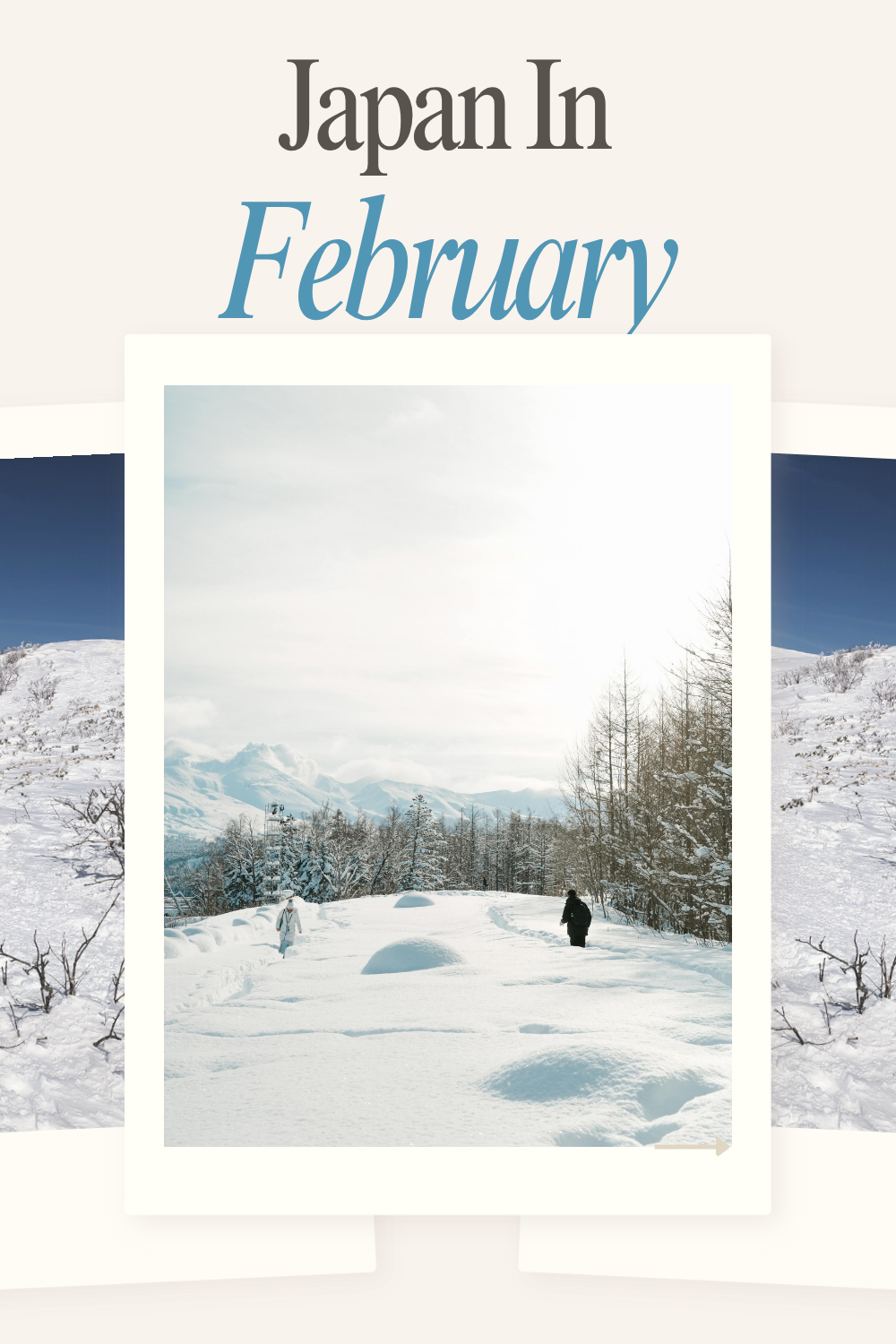
Planning a trip to Japan and wondering if February is a good time to visit and what it’s like?
February is one of the best winter months to visit Japan if you want snow, hot springs, winter festivals, ski resorts, clear Mount Fuji views, cozy food, and fewer crowds in major cities compared with spring and fall.
It is still cold across most of the country, but the experience changes dramatically depending on where you go.
That is the key thing to understand about Japan in February: the weather is very different by region.
- Hokkaido is deep winter with heavy snow, northern Honshu and the Japanese Alps are cold and snowy.
- Tokyo, Kyoto, and Osaka are cold but usually manageable.
- Kyushu is milder
- Okinawa feels like a cool subtropical escape rather than a true winter destination.
Summary Of Visiting Japan In February
February is one of Japan’s coldest months, but it can also be one of the most rewarding months to visit. If you plan around the weather instead of trying to fight it, Japan in February gives you winter scenery, seasonal events, hot springs, snow activities, and quieter sightseeing in many major cities.
Here’s what to expect when visiting Japan in February:
- February is one of the best months for skiing and snowboarding in Japan, especially in Hokkaido, Nagano, Niigata, Hakuba, Niseko, and the Japanese Alps.
- Hokkaido is very cold and snowy, with Sapporo, Niseko, Furano, and Asahikawa feeling like true winter destinations.
- Tokyo, Kyoto, Osaka, Hiroshima, and much of the Pacific side of Honshu are cold but often dry enough for comfortable sightseeing with the right clothing.
- The Sea of Japan side of Honshu, including Kanazawa, Niigata, Toyama, Akita, and Aomori, is much snowier and cloudier than the Pacific side.
- February is a great month for onsens, ryokans, ramen, nabe hot pot, winter seafood, and cozy izakaya dinners.
- The Sapporo Snow Festival usually makes early February very busy and expensive in Sapporo.
- Ski towns and popular onsen towns are in high demand, so lodging should be booked early.
- Major cities are usually less crowded than cherry blossom season, fall foliage season, and summer vacation periods.
- Late February can bring early plum blossoms in Tokyo, Kyoto, Osaka, Fukuoka, and other warmer areas.
- Okinawa is much warmer than mainland Japan, but February is usually better for sightseeing and whale watching than swimming.
- Pack very differently depending on your itinerary. Tokyo and Kyoto need winter layers, while Hokkaido and mountain areas need real snow gear.
February Is Winter Travel Season In Japan
February is full winter in Japan, and for some travelers, that is exactly what makes it special. If you want snow-covered villages, ski resorts, winter festivals, hot spring towns, and cozy food, February is one of the best months of the year to visit.
In northern Japan and the mountains, February is peak winter travel season. Places like Sapporo, Niseko, Hakuba, Nagano, Nozawa Onsen, and Shirakawa-go can be busy because winter is the whole point of visiting them.
In major cities like Tokyo, Kyoto, Osaka, Hiroshima, and Fukuoka, February is usually much calmer than spring and fall. You will not get cherry blossoms or autumn leaves, but you do get fewer crowds, better availability at many city hotels, crisp air, winter food, and a more local-feeling pace.
February is also a good month for travelers who like mixing regions. You can ski in Hokkaido, warm up in an onsen in Hakone, eat your way through Osaka, see plum blossoms in Kyoto, and then fly to Okinawa for milder island weather.
Japan Weather In February
Japan’s weather in February depends heavily on region, island, elevation, and coast. The Pacific side of Japan is usually colder and drier, while the Sea of Japan side gets heavier snow and rain. Hokkaido and the Japanese Alps are deep winter, Honshu varies a lot by coast and elevation, Kyushu is cool to mild, and Okinawa is subtropical.
Hokkaido Weather In February
Hokkaido is the coldest of Japan’s main islands in February. This is the place to go if you want snow, powder skiing, icy winter scenery, seafood, and hot springs.
In Sapporo, daytime temperatures are often around freezing or below, while nights are well below freezing. In ski areas like Niseko, Furano, and Rusutsu, it can feel even colder, especially during windy or snowy days.
Expect:
- Very cold winter weather
- Frequent snow and icy sidewalks
- Excellent ski and snowboard conditions
- Snow-covered parks, streets, and mountains
- A need for insulated boots, thermals, gloves, hat, scarf, and a heavy winter coat
- High demand in Sapporo during the Snow Festival period
- Strong demand at ski resorts throughout the month
Hokkaido in February is best for travelers who want a real winter trip. It is not the place to pack light, but it is one of the most memorable regions of Japan in winter.
Tokyo, Yokohama & The Kanto Region Weather In February
Tokyo, Yokohama, and the Kanto region are cold in February, but they are usually much easier to handle than northern Japan. Most days are crisp and chilly rather than snowy.
Tokyo daytime temperatures are often around the upper 40s to low 50s°F, with nights in the 30s°F. Snow is possible, but it is not something I would plan a trip around. What I would plan around are clear winter views, warm restaurants, indoor museums, and neighborhoods that are much easier to explore than they are during summer heat.
Expect:
- Cold mornings and evenings
- Fairly dry winter weather
- Good sightseeing conditions with layers
- Clearer views from observation decks
- Rare but possible snow
- Comfortable city travel without needing full snow gear
Tokyo in February is one of the easier winter destinations in Japan. You need a warm coat, but you usually do not need heavy-duty snow clothing unless you are taking day trips into mountain areas.
Kyoto, Osaka, Nara & The Kansai Region Weather In February
Kyoto, Osaka, Nara, and the Kansai region are cold in February, but still very doable for sightseeing.
Kyoto can feel especially cold because so many of its best experiences are outdoors: temples, gardens, stone streets, shrines, and river walks. Osaka is often easier because you can balance sightseeing with indoor food halls, shopping arcades, restaurants, and nightlife.
Expect:
- Cool to cold days
- Cold mornings and nights
- Occasional light snow, especially in Kyoto
- Fewer crowds than cherry blossom and autumn foliage seasons
- Good conditions for temple visits if you dress warmly
- Possible early plum blossoms later in the month
Kansai in February is great for travelers who want Kyoto and Osaka without peak-season crowds. The weather is cold, but it is usually not severe enough to ruin sightseeing.
Japanese Alps, Nagano, Takayama & Mountain Towns Weather In February
The Japanese Alps and central mountain regions are much colder and snowier than Tokyo, Osaka, and Kyoto. Places like Nagano, Takayama, Matsumoto, Hakuba, and Shirakawa-go can be beautiful in February.
This is one of the best regions if you want snowy scenery without going all the way to Hokkaido. It is also a great area for ryokans, hot springs, ski resorts, traditional villages, and mountain views.
Expect:
- Cold winter temperatures
- Snow in mountain towns and higher elevations
- Icy roads and sidewalks
- High demand in ski towns
- Beautiful snowy scenery in Takayama and Shirakawa-go
- A need for boots with traction and warm winter clothing
This region is fantastic in February, but I would not plan super tight travel days here. Snow can slow down buses, trains, and road transfers.
Sea Of Japan Coast Weather In February
The Sea of Japan side of Honshu is much snowier and wetter than the Pacific side. This includes places like Kanazawa, Niigata, Toyama, Akita, and Aomori.
This side of Japan can feel dramatic in February. It is colder, cloudier, and more unpredictable, but it also has some of the best winter atmosphere in the country. Snowy gardens, seafood markets, old districts, and winter festivals make it worth considering.
Expect:
- More snow and rain than Tokyo, Kyoto, or Osaka
- Cloudier skies
- Snow-covered historic streets and gardens
- Excellent winter seafood
- Possible travel delays during heavy snow
- A need for waterproof shoes or boots
Kanazawa in particular can be a great February destination if you want winter charm, gardens, seafood, and traditional neighborhoods without going too remote.
Hiroshima, Western Honshu & The Seto Inland Sea Weather In February
Hiroshima, Miyajima, and the Seto Inland Sea region are cool to cold in February, but generally milder than northern Japan and many mountain areas.
This region is a good choice if you want history, food, island scenery, and a winter itinerary that does not revolve around snow. You still need warm clothing, but you usually do not need heavy snow gear.
Expect:
- Cool days and cold nights
- Less snow than northern and mountain regions
- Comfortable sightseeing with layers
- Quieter visits to Hiroshima and Miyajima
- A calmer winter pace than Tokyo or Kyoto
Western Honshu is a nice February add-on if you want variety in your Japan trip without adding harsh winter logistics.
Kyushu Weather In February
Kyushu is one of the milder regions of Japan in February. Cities like Fukuoka, Nagasaki, Kumamoto, and Kagoshima are cool rather than freezing most of the time.
That said, Kyushu is not tropical in February. You still need a jacket, especially at night. Mountain and onsen areas such as Beppu, Yufuin, Mount Aso, and Kurokawa Onsen can be much colder.
Expect:
- Milder winter weather than Tokyo, Kyoto, or northern Japan
- Cool days and chilly nights
- Excellent onsen conditions
- Great food travel in Fukuoka and Nagasaki
- Some colder conditions in mountain areas
- Less need for heavy snow gear unless going inland or high elevation
Kyushu in February is a good choice if you want food, hot springs, history, and a slightly softer winter experience.
Okinawa & The Ryukyu Islands Weather In February
Okinawa and the Ryukyu Islands are the warmest part of Japan in February. This is a completely different climate from Hokkaido, Nagano, Tokyo, or Kyoto.
In Naha, February is usually mild, with daytime temperatures often in the 60s°F. It can still be breezy, cloudy, and cool by island standards, so I would not treat it like a hot tropical beach month.
Expect:
- Mild subtropical winter weather
- Daytime temperatures often in the 60s°F
- Cooler evenings and ocean breezes
- A better month for sightseeing than swimming
- Whale watching season
- Fewer beach crowds than warmer months
Okinawa in February is best for travelers who want a mild winter escape, coastal scenery, island culture, and seasonal whale watching. It is not ideal if your main goal is hot beach weather.
Japan Sunrise & Sunset In February
February has more daylight than January, and you can feel the days getting longer as the month goes on. Still, it is winter, so planning outdoor sightseeing earlier in the day is smart.
In Tokyo, sunrise is usually around 6:40 AM at the beginning of February and closer to 6:15 AM by the end of the month. Sunset is usually around 5:10 PM at the beginning of February and closer to 5:35 PM by the end of the month.
Here’s what to expect across Japan in February:
- Hokkaido has shorter daylight than southern Japan, and sunset can still feel early.
- Tokyo, Kyoto, Osaka, and central Japan usually have enough daylight for a full sightseeing day if you start early.
- Kyoto temple visits are best in the morning or early afternoon because many temples close before dinner.
- Kyushu has slightly longer winter daylight than Tokyo and Kyoto.
- Okinawa has the longest and warmest-feeling February days, with later sunsets than mainland Japan.
For planning, I would schedule outdoor attractions, temples, gardens, scenic viewpoints, and mountain trips earlier in the day. Save food tours, izakayas, illuminations, shopping streets, museums, onsens, and city neighborhoods for late afternoon and evening.
Best Things To Do In Japan In February
February is one of the best months in Japan for winter-specific activities. You can still do the classic first-time Japan route, but February gives you added seasonal experiences like snow festivals, hot springs, skiing, snow monkeys, plum blossoms, winter food, and Okinawa whale watching.
Visit The Sapporo Snow Festival
The Sapporo Snow Festival is one of the biggest reasons to visit Japan in February. Sapporo turns into a winter city filled with snow sculptures, ice displays, lights, food stalls, and a festive atmosphere.
If you are going to Sapporo during the festival period, book your hotel early because this is one of the busiest times of the year in the city. I would also give yourself enough time to see the displays during both the day and evening, because the sculptures feel completely different when they are lit up at night.
If you want to build more Hokkaido winter scenery around your Sapporo stay, you can also join a Hokkaido winter day tour from the city.
Go Skiing Or Snowboarding In Niseko
Niseko is one of the most famous ski destinations in Japan, and February is prime time for powder. The snow quality is the main draw, but the area also has good restaurants, international traveler services, and beautiful views of Mount Yotei.
This is not usually a cheap February destination, especially if you are booking close to your travel dates. If skiing or snowboarding is one of the main reasons for your Japan trip, I would lock in lodging, rentals, and lessons early.
Ski Or Snowboard In Hakuba
Hakuba is one of the best places to ski in central Japan, especially if you want easier access from Tokyo compared with Hokkaido. February is a strong month for snow, and the mountain scenery is beautiful.
Hakuba works well for serious skiers, snowboarders, groups, and travelers who want a multi-day winter sports base. It also pairs well with Nagano, Matsumoto, and the snow monkeys.
If you want a simpler setup, you can arrange a Hakuba ski or snowboard experience instead of handling every detail separately.
See The Snow Monkeys In Nagano
Jigokudani Monkey Park is especially popular in February because the snow makes the scenery feel exactly like the photos most travelers have in mind. Seeing the Japanese macaques around the hot spring area is one of the classic winter experiences in Japan.
The park is usually visited from Nagano or nearby onsen towns. You will need warm clothing and shoes with good traction because the walking path can be snowy or icy.
To make the logistics easier, you can visit the snow monkeys on a Nagano day trip that also includes other regional stops.
Stay In A Ryokan And Soak In An Onsen
A winter ryokan stay is one of the best things to do in Japan in February. Cold weather makes the whole experience better: hot tea in your room, a traditional dinner, futon bedding, and time in a steaming onsen.
Good February onsen destinations include Hakone, Kusatsu Onsen, Nozawa Onsen, Beppu, Yufuin, Kinosaki Onsen, and Noboribetsu.
If you are basing yourself in Tokyo, explore Mount Fuji and Hakone on a day trip or overnight stay for a mix of hot springs, lake scenery, and winter Fuji views.
See Mount Fuji On A Clear Winter Day
Mount Fuji can be easier to see in February than in warmer, more humid months. The air is often clearer, and the snowcap makes it look especially beautiful.
Good places to try for Mount Fuji views include Lake Kawaguchi, Hakone, Tokyo observation decks, the Shinkansen route between Tokyo and Kyoto or Osaka, and the Fuji Five Lakes area.
If seeing Fuji is a priority, do not rely on one quick view. Weather can still block the mountain, so it helps to plan more than one opportunity. A guided option can make the day easier if you want to take a Mount Fuji and Hakone tour without managing all the transfers yourself.
Visit Kyoto’s Temples Without Peak Season Crowds
Kyoto in February is cold, but it is much calmer than cherry blossom or fall foliage season. Famous places like Kiyomizu-dera, Fushimi Inari Taisha, Kinkaku-ji, and Arashiyama are easier to enjoy if you start early.
I especially like Kyoto in February mornings. The air feels crisp, the streets are quieter, and the temples have a peaceful winter atmosphere. Just dress warmly because many temple visits involve standing, walking, and waiting outdoors.
For a more cultural indoor break during a cold day, you can experience a traditional Kyoto tea ceremony.
See Plum Blossoms In Late February
February is too early for cherry blossoms in most of Japan, but it is a good time to start looking for plum blossoms, especially in late February. Plum blossoms are not as internationally famous as sakura, but they are beautiful and feel like the first hint of spring.
Good places to see plum blossoms include Kitano Tenmangu Shrine in Kyoto, Osaka Castle Park, Yushima Tenjin Shrine in Tokyo, Hanegi Park, Kairakuen Garden, and Dazaifu Tenmangu Shrine.
The bloom timing changes by year and weather, so late February into early March is usually the safer window. If you are already in Kyoto, take a guided cultural walk in Kyoto and pair it with a plum blossom stop if the flowers are blooming.
Explore Osaka’s Food Scene
Osaka is one of my favorite cities in Japan during winter because so much of the experience revolves around food. February weather makes takoyaki, okonomiyaki, kushikatsu, ramen, and izakaya food taste even better.
Dotonbori, Namba, Shinsekai, Kuromon Market, and Umeda are all great areas to explore. Osaka is also a good base because you can day trip to Kyoto, Nara, Kobe, Himeji, or even Hiroshima depending on your route.
If you want someone to lead you through the local food scene, take an Osaka food tour instead of guessing where to eat.
Visit Nara On A Quieter Winter Day
Nara is an easy day trip from Kyoto or Osaka, and February can be a peaceful month to visit. The major sights are still open, the deer are still around, and the crowds are usually lighter than peak travel seasons.
The classic route includes Nara Park, Todai-ji Temple, Kasuga Taisha Shrine, and the old streets around Naramachi.
If you want more context while visiting the temples and deer park, you can tour Nara’s UNESCO sites and deer park.
Visit Hiroshima And Miyajima
Hiroshima and Miyajima are very doable in February. The weather is cool to cold, but usually not as harsh as northern Japan.
In Hiroshima, the Hiroshima Peace Memorial Park, Atomic Bomb Dome, and Peace Memorial Museum are important stops. On Miyajima, Itsukushima Shrine and the floating torii gate are the highlights.
If you want to see both places efficiently, you can take a Hiroshima and Miyajima UNESCO sites tour.
Go Whale Watching In Okinawa
Okinawa is one of the best places in Japan to be in February if you want milder weather and a completely different feel from the mainland. It is not usually hot enough for a classic beach vacation, but it is a good time for coastal drives, island sightseeing, culture, and whale watching.
February is part of Okinawa’s whale watching season, and tours often run from Naha and nearby areas. Weather and sea conditions matter, so it is smart to leave some flexibility in your schedule.
If this is high on your list, you can go whale watching in Okinawa during the winter season.
Spend A Cold Day At teamLab Planets In Tokyo
teamLab Planets is a great February activity because it gives you a memorable indoor experience when the weather is cold. It is immersive, photogenic, and easy to combine with other Tokyo neighborhoods.
This works especially well if you have a windy, rainy, or extra cold day in Tokyo and want something different from temples, shopping, or museums. I would book ahead because popular time slots can fill up.
You can book teamLab Planets tickets before your visit.
Experience Sumo Culture In Tokyo
Tokyo is a great place to learn about sumo, even if your trip does not line up with a grand tournament. February is a good month for indoor cultural experiences, and sumo is one of the most memorable.
A morning practice visit or sumo show gives you a closer look at the traditions, discipline, and physicality of the sport. This is also a nice activity to balance out cold-weather sightseeing.
If you want something structured, you can watch a sumo morning practice with a guide.
Eat Your Way Through Tokyo In Winter
Tokyo is amazing year-round, but February makes its food scene feel especially comforting. This is the kind of month where ramen, yakitori, curry, udon, soba, oden, sushi counters, and izakayas are exactly what you want after a long day outside.
Good food neighborhoods include Shinjuku, Shibuya, Ginza, Ueno, and Tsukiji Outer Market.
For a guided night out, you can take a Shinjuku food tour and let someone local handle the restaurant choices.
Visit Kanazawa In The Snow
Kanazawa is a beautiful February destination if you like gardens, old districts, seafood, and traditional city atmosphere. Kenrokuen Garden can be especially pretty in winter, and the city feels slower and cozier than Tokyo or Osaka.
Kanazawa is on the Sea of Japan side, so expect colder, wetter, and snowier weather than the Pacific side. Waterproof shoes or boots are a good idea.
If you want to combine the city with a winter village experience, you can explore Shirakawa-go and Kanazawa on a guided tour.
Explore Shirakawa-go In Winter
Shirakawa-go is one of the most scenic winter villages in Japan. February is a strong month for snow, and the traditional gassho-zukuri houses look especially beautiful under a thick white layer.
This is a place where you need to plan transportation carefully. Buses can book up, winter road conditions can slow things down, and overnight lodging is limited.
If you are staying in Kanazawa or Takayama, it can be easier to visit Shirakawa-go on a guided day trip.
Visit Fukuoka For Food And A Milder Winter
Fukuoka is a great February option if you want a city that feels easier and milder than Tokyo or Kyoto. It is famous for tonkotsu ramen, yatai food stalls, shopping, seaside areas, and easy access to other parts of Kyushu.
February is still cool, but it is a comfortable month for food-focused travel. It also works well if you want to continue to Nagasaki, Beppu, Yufuin, Kumamoto, or Kagoshima.
For a more local night out, you can join a Fukuoka food tour and experience the city’s winter food scene with a guide.
Visit Beppu Or Yufuin For Hot Springs
Beppu and Yufuin are two of Kyushu’s best onsen destinations, and February is a great month for both. The cooler air makes hot spring bathing feel even better.
Beppu has a more active, steamy, geothermal feel, while Yufuin feels quieter and more scenic. Both are good choices if you want to slow down after bigger cities.
From Fukuoka, you can take a hot spring-focused day trip in Kyushu if you do not want to manage the route yourself.
See Winter Illuminations
Winter illuminations often continue into February in parts of Japan, especially around major cities, shopping districts, theme parks, and parks. They are a great evening activity because sunset comes early and the lights make cold nights feel more festive.
In Tokyo, check areas like Roppongi, Marunouchi, Shibuya, and Tokyo Midtown. In Kansai, Osaka, Kobe, and Kyoto often have seasonal lighting as well.
If you prefer guided evening sightseeing, you can take a Tokyo night tour and combine lights, viewpoints, and neighborhoods.
Visit Museums On Cold Or Wet Days
February is a smart month to keep a few indoor activities in your itinerary. Museums are especially useful if you get a windy day, rain, snow, or travel fatigue.
Good options include Tokyo National Museum, Ghibli Museum, Mori Art Museum, Kyoto National Museum, and Osaka Museum of History.
For Tokyo specifically, book an indoor art experience if you want something more immersive than a traditional museum.
Take A Scenic Winter Train Ride
Japan’s trains are useful year-round, but February makes some routes especially scenic. Snowy mountain lines, Shinkansen routes with Mount Fuji views, and Sea of Japan coast routes can all be memorable.
Good winter rail areas include Nagano, Niigata, Toyama, Hokkaido, and the routes around Kanazawa and Takayama. Just leave extra time in snowy regions because winter weather can cause delays.
For travelers who want a more structured experience, you can book guided day trips from Tokyo or other major cities rather than managing every connection yourself.
Pros And Cons Of Visiting Japan In February
Japan in February is a great choice if you like winter travel, snow scenery, hot springs, food, skiing, and fewer crowds in major cities. The downside is that it is cold, some regions require serious winter clothing, and snowy areas need more flexible planning.
Pros
- Excellent month for skiing and snowboarding
- Great snow conditions in Hokkaido, Nagano, Niigata, Hakuba, and the Japanese Alps
- Sapporo Snow Festival and other winter events make February feel special
- Good month for onsens, ryokans, ramen, nabe, and winter seafood
- Major cities are usually less crowded than spring and autumn
- Clear winter air can mean better Mount Fuji views
- Late February can bring plum blossoms in warmer areas
- Okinawa offers a mild island escape and whale watching season
- City hotels can be more reasonable than peak cherry blossom or fall foliage periods
- February gives you a very different version of Japan than most first-time visitors experience
Cons
- It is one of the coldest months of the year in much of Japan
- Hokkaido, Nagano, and mountain areas require proper winter packing
- Sapporo can be expensive and crowded during the Snow Festival
- Ski resorts and famous ryokans can book up early
- Snow can cause delays in northern and mountain regions
- Shorter daylight means outdoor sightseeing should start earlier
- Gardens are less colorful than spring and fall unless plum blossoms are blooming
- Okinawa is mild but usually not hot enough for a true beach trip
- Some travelers may find temple sightseeing cold, especially in Kyoto
Who Should Visit Japan In February
Japan in February is best for travelers who enjoy winter, or at least do not mind dressing for it. If you want snow, ski resorts, hot springs, winter food, clear Mount Fuji views, quieter city sightseeing, and seasonal events, February can be an excellent month to visit.
It is also a good month for travelers who want a more varied Japan trip. You can experience deep winter in Hokkaido or Nagano, classic city sightseeing in Tokyo and Kyoto, food travel in Osaka and Fukuoka, and mild island weather in Okinawa.
February is not the best fit if you want warm weather, beaches, long daylight hours, cherry blossoms, or easy one-outfit packing. But if you plan by region and pack correctly, Japan in February can be one of the most memorable times of year to go.
Not A Member of Jetsetter Alerts? ✈️
Sign up for our cheap flight alerts to get notified of any amazing deals on flights to Japan!
Get airline mistake fare & flash sales alerts.