World's Largest Ski Resorts (Top 10)
Discover the largest ski resorts in the world—how many acres and runs they have, plus the number of lifts at each resort.
In this guide, we take a look at some of the biggest ski resorts in the world—from North America to Europe. These mountains aren’t just huge—they’re the kind of places that deliver long lift networks, endless terrain, and truly world-class skiing.
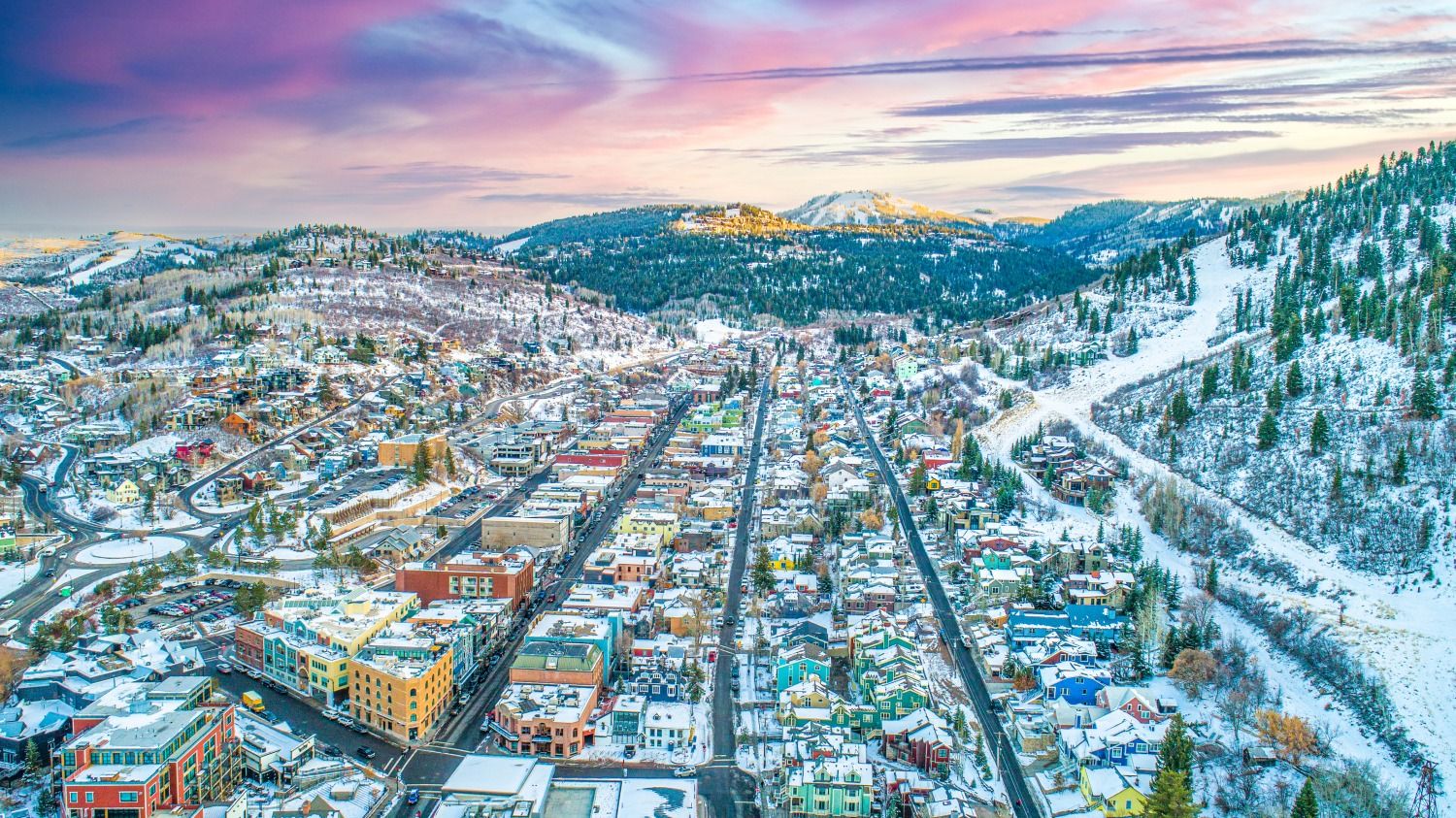
Park City Utah
Ranked 10th: Largest Ski Resort In The World
- Ski Area: 7,300+ acres
- Number of Runs: 341
- Number of Lifts: 41
Founded in 1884 as a silver mining town, Park City has grown into the largest ski area in the United States. With 17 peaks and full resort amenities, it’s an easy pick for families. Beginners and kids can stick to the mellow groomers in High Meadow Park, while advanced skiers can chase bowls and chutes off Jupiter Peak and tackle the double-black terrain in McConkey’s Bowl.
If conditions line up, Murdock Bowl is a can’t-miss zone for powder hunters. Wrap up the day with a cruisy lap down Home Run from the Silverlode Express to the base—one of the resort’s longest descents at about 3.5 miles.
Not A Member? ✈️
Save 40%-95% with Jetsetter Alerts - Airline Mistake Fare & Flash Sales Alerts!
Whistler Blackcomb, B.C.
Ranked 9th: Largest Ski Resort In The World
- Ski Area: 8,171 acres
- Number of Runs: 200+
- Number of lifts: 37
- Website
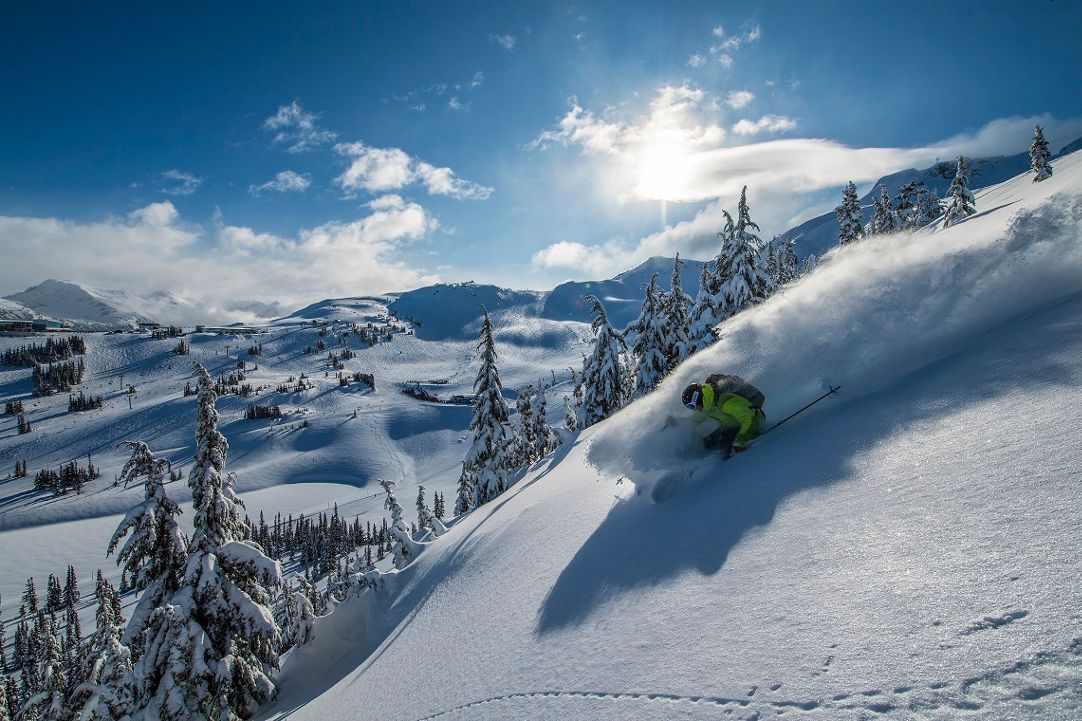
At Whistler Blackcomb, the headline is pure scale—it’s widely billed as the largest ski resort in North America, with about 8,171 acres and 200+ marked runs spread across Whistler Mountain and Blackcomb Mountain. The two peaks are linked by the Peak 2 Peak Gondola, so you can move between zones fast and stack huge ski days without feeling stuck on one side.
Terrain-wise, it’s built for variety—16 alpine bowls and 3 glaciers up high for big-mountain laps, plus long groomers and gladed tree runs when you want a different style of skiing. It’s the kind of resort where you can chase steep chutes in the morning, cruise wide-open bowls midday, then finish with tree lines when visibility drops.
Val d’Isere-Tignes, France
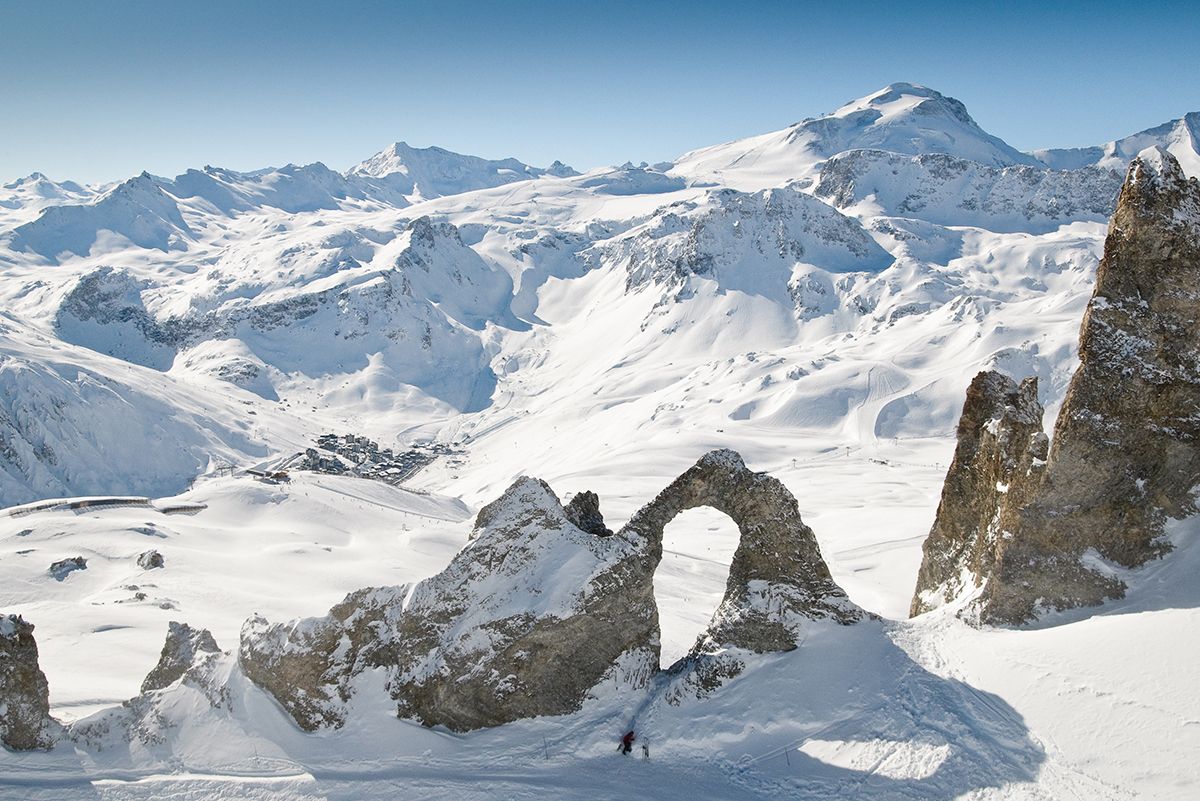
Ranked 8th: Largest Ski Resort In The World
- Ski Area: 300 km (186.4 miles) of Slopes
- Number of Runs: 159
- Number of lifts: 75
- Website
Formerly known as L’Espace Killy, Val d’Isère–Tignes is a massive, lift-linked ski domain that connects Val d’Isère and Tignes—so you can ski two major mountains in one continuous network. A big reason it’s so snow-reliable is elevation: about 60% of the slopes sit above 7,218 feet, and Grande Motte Glacier adds true high-alpine terrain. In summer, that glacier can even keep 12+ miles of groomed runs open for skiing.
Intermediates can rack up long, confidence-building laps on high-altitude blue cruisers like Génépy and Rabotch on the glacier sector, while advanced skiers can test themselves on La Face de Bellevarde—the steep, famous Olympic downhill line. For expert terrain beyond the pistes, routes like Col Pers add variety with a higher, north-facing descent that starts near the Col de l’Iseran glacier area.
Arlberg Ski Resort, Austria
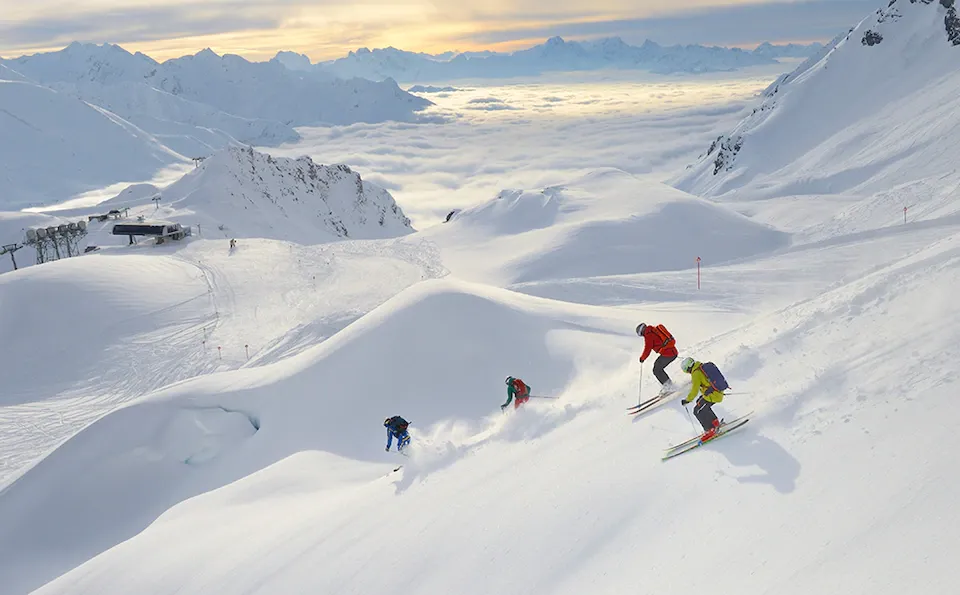
Rank 7th: Largest ski resort in the world
- Ski Area: 305km (189.5 miles) of Groomed Slopes & 200km off-piste/free ride
- Number of Lifts: 88
- Website
Arlberg, the largest ski area in Austria, sets the scene for early-morning laps and slow afternoons with strudel. Spread across three main regions and five interconnected towns, it’s tied together by a smooth lift system—so everyone from beginners and intermediates to off-piste skiers (with a guide) can find their lane.
The Weisse Ring (White Ring) route—about 14 miles—traces the paths of early ski pioneers. It’s a must for the classic European ski experience, whether you take it at an easy pace or time your visit to catch the annual White Ring Ski Race in spring.
After a day on the slopes, jump into the legendary après scene in St. Anton—or head to quieter, family-friendly Stuben to wind down.
#6 Matterhorn Ski Paradise, Switzerland/Italy
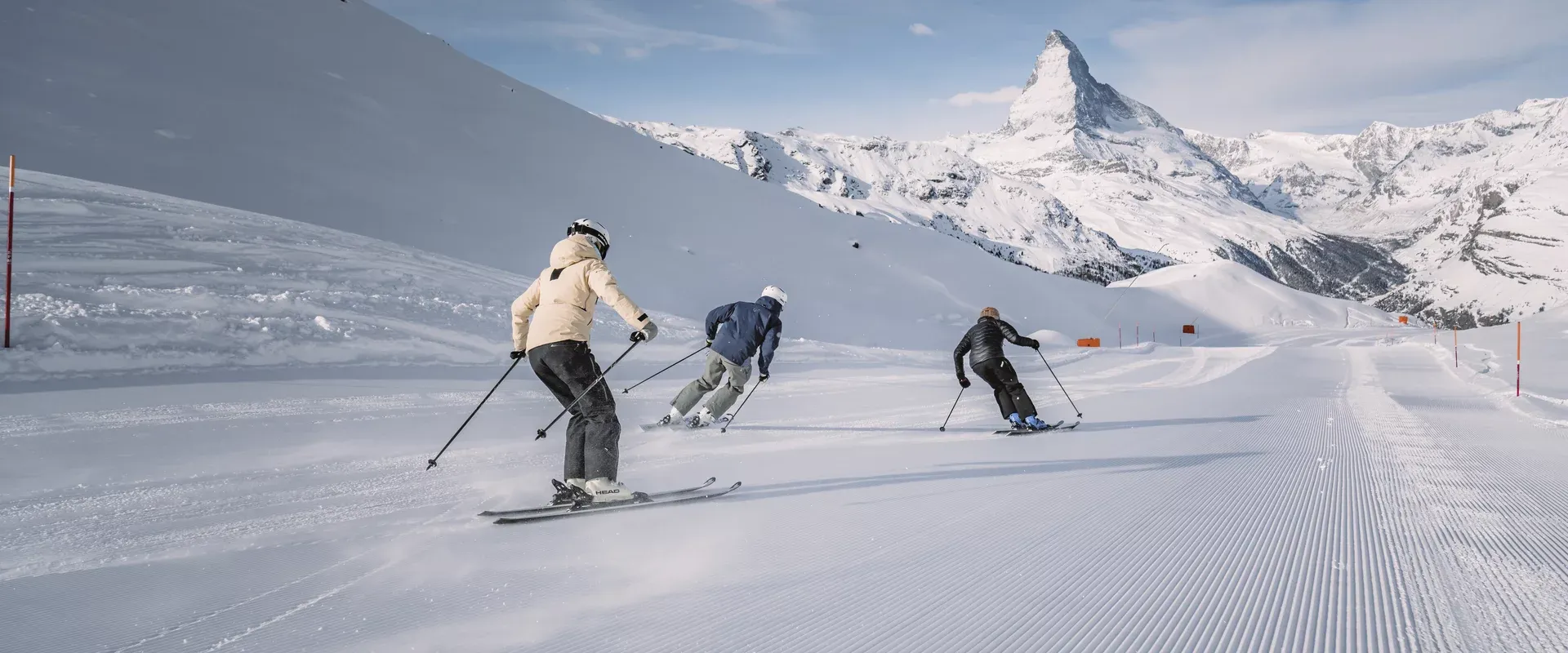
Ranked 6th: Largest Ski Resort In The World
- Ski Area: 360km (223.6 miles) of Slopes
- Number of Runs: 145
- Number of Lifts: 52
- Website
Against the backdrop of the iconic Matterhorn, Matterhorn Ski Paradise delivers a classic alpine setting with perfectly groomed slopes. Head to Zermatt for the quintessential European ski experience—spanning the Swiss border into Italy’s Aosta Valley.
Take on the Matterhorn Ski Safari, linking 29 lifts and cable cars while cruising into the Cervinia-Valtournenche ski area in Italy. Don’t miss Matterhorn Glacier Paradise, Europe’s highest mountain station at 12,740 feet, where high-alpine glacier skiing on the Theodul Glacier can stretch the season well into summer.
Intermediate skiers and up will feel right at home on the resort’s wide, steep pistes—many of them with a ski-race vibe. And for a bucket-list lap, tackle the area’s legendary long descent from the Klein Matterhorn down toward Zermatt.
#5 Via Lattea, Italy/France
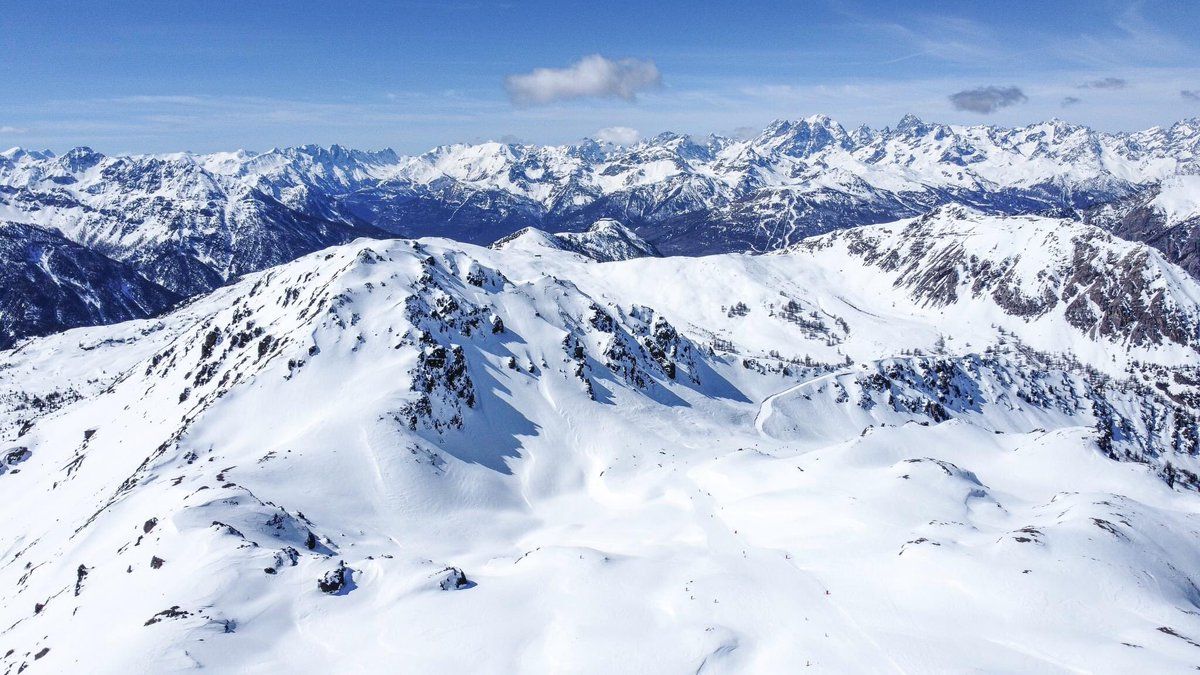
Ranked 5th: Largest Ski Resort In The World
- 400km (248.548 miles) of Slopes
- Number of Runs: 249
- Number of Lifts: 70
- Website
Via Lattea is a big, border-spanning ski domain that links eight villages across the Italian and French Alps—so it skis more like a region than a single resort. The main bases include Pragelato, Sansicario, Cesana Torinese, Claviere, Sauze d'Oulx, Oulx, plus Montgenèvre on the French side. Because it’s so spread out, it pays to pick a “home base” and plan your route for the day—otherwise you’ll burn a lot of time just moving between sectors.
For easier terrain, the Sportinia mid-station is a solid hub for beginners and relaxed laps. If you want more character, Sauze d'Oulx is known for fun tree-lined runs that stay interesting even when visibility is rough. Strong intermediates and advanced skiers can also chase big, fast groomers—especially the Olympic-era terrain at Sansicario, including the Women’s Downhill track used for the 2006 Winter Olympics.
To ski both Italy and France in one trip, you’ll need the International Ski Pass. If you’re keeping it simpler (or staying shorter), the Via Lattea ski pass covers the Italian side and still gives you plenty of terrain to fill multiple days.
#4 Les 4 Vallées, Switzerland
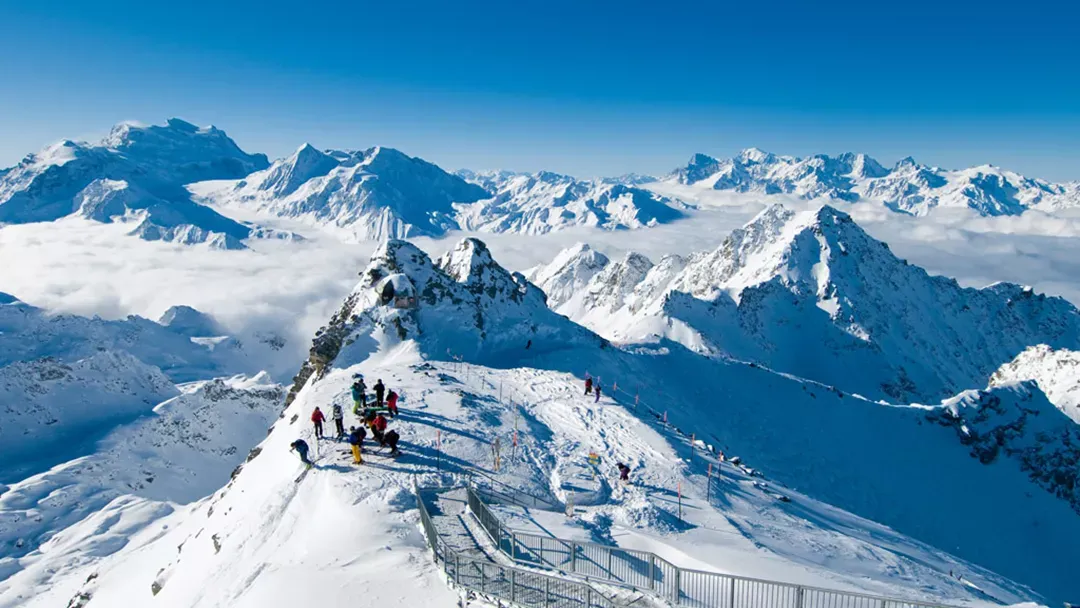
Ranked 4th: Largest Ski Resort In The World
- 410 km (254.8 miles) of Slopes
- Number of Runs: 102
- Number of Lifts: 93
- Website
Included on the Epic Pass with special conditions
Les 4 Vallées is Switzerland’s biggest linked ski area, connecting six resort bases—Verbier, Bruson, La Tzoumaz, Nendaz, Veysonnaz, and Thyon—so you can rack up huge mileage without feeling boxed into one mountain. The vertical range is a big part of why it skis so well, starting around 4,101 feet and climbing to the lift-served Mont Fort glacier at roughly 10,925 feet, which helps keep conditions reliable and gives you everything from mellow cruisers to high-alpine terrain.
For easier skiing and family-friendly laps, Nendaz and Veysonnaz are known for a comfortable mix of wide groomers and straightforward access. When you want the serious stuff, the expert zones are the headline—steeper faces off Mont Fort and the terrain around Bec des Rosses (a Freeride World Tour venue) deliver big-mountain lines, while the Tortin Wall is a classic gut-check run—steep, mogul-heavy, and made for strong legs.
#3 Paradiski, France
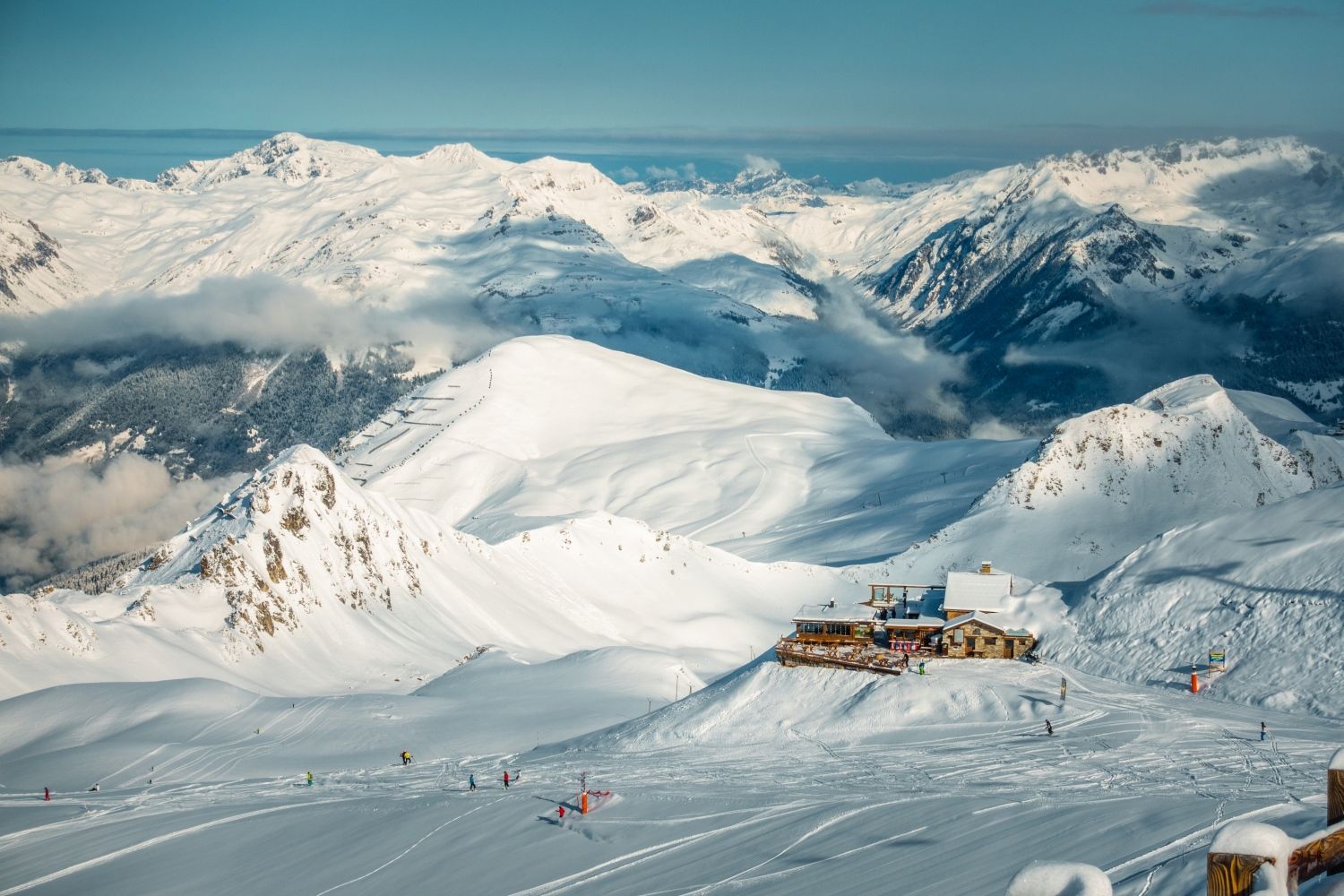
Ranked 3rd: Largest Ski Resort In The World
- 425km (264 miles) of Slopes
- Number of Runs: 264
- Number of Lifts: 164
- Website
Paradiski is a huge linked ski domain created by Les Arcs, Peisey-Vallandry, and La Plagne—connected by the double-decker Vanoise Express. With 20 villages spread across the network, it’s the kind of place where you can ski different zones for days and still feel like you’re just scratching the surface.
A big reason it skis so reliably is elevation—about 70% of the slopes sit above 6,562 feet, which helps keep coverage strong through the season. For big-vertical days, Aiguille Rouge tops out around 10,584 feet, and you can drop into a long, sustained descent of roughly 4.3 miles down to Villaroger.
If you’re hunting steeper, more advanced terrain, you’ll find it on the higher faces and glacier zones around Chiapue Glacier, while Varet Gondola gives access to bigger lines and freeride-style options in the La Plagne sector.
#2 Sella Ronda, Italy
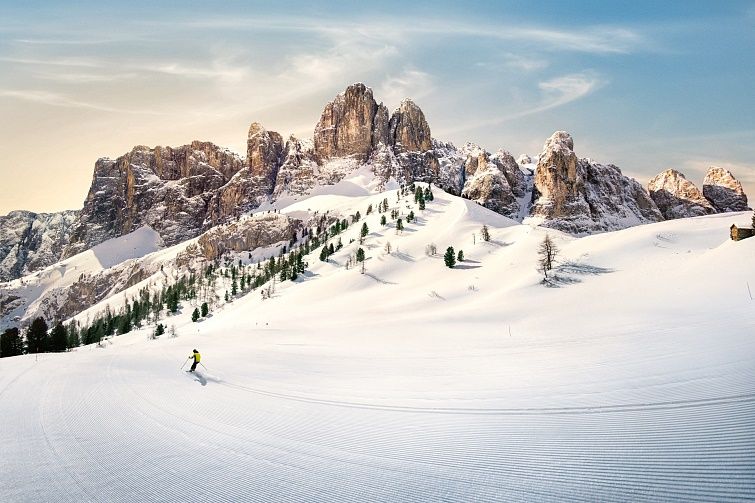
Ranked 2nd: Largest Ski Resort In The World
- 500 km (310.6 miles) of Slopes
- 4 Connected Ski Resorts
- 222 Lifts
- Website
Sella Ronda is a famous ski circuit in the Dolomites—a linked loop of groomed pistes that wraps around the Sella massif and lets you ski continuously from area to area without backtracking. The loop is clearly marked with orange signs for clockwise and green signs for counterclockwise, making it easy to follow even if it’s your first time.
The classic route is built for confident intermediates and covers about 40 km (24 miles) of skiing, crossing four resort areas and multiple mountain passes on the Dolomiti Superski ticket. From the main loop, you can branch off into the bigger terrain zones around Ortisei, Val Gardena, Corvara, and Arabba if you want to stack on extra laps and mileage.
If you want something steeper than the usual cruising groomers, the marquee challenge nearby is Gran Risa—a well-known pitch that’s used for World Cup racing. The big draw here isn’t extreme terrain—it’s the sheer scale and flow of the day: start early, keep your pace steady, and you can finish the full loop with time left for lunch and a few bonus runs.
#1 Les 3 Vallées, France
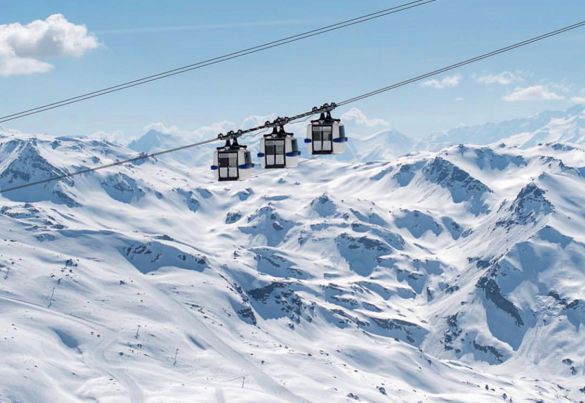
Ranked 1st: Les 3 Vallées Is The Largest Ski Resort In The World
- 600 km (372.8 miles) of Slopes
- Number of Runs: 328
- Number of Lifts: 166
- Website
At Les 3 Vallées, you’re skiing one massive, connected lift-and-run network that links Val Thorens, Courchevel, and Méribel-Mottaret—so you can cover serious ground in a single day without repeating the same laps. Val Thorens also sits high (about 7,546 feet), which helps keep conditions reliable when lower-elevation areas soften.
For big vertical and high-alpine terrain, you can ride from Orelle up via the Bouchet chair to a lift-served high point around 10,597 feet. Advanced and expert skiers can find steeper lines and narrow couloirs—like the Pierre Lory route—where the pitch eases out into more open snowfields, but it’s smart to hire a guide if you’re heading into remote terrain. For a huge, top-to-bottom viewpoint of the range, the Cime Caron ride is a classic, with views that can stretch to Mont Blanc on a clear day.
FAQs
Other Popular Articles
 Sara Miller
 Jetsetter Alerts
 Jetsetter Alerts