12 Best Places in Japan to View Cherry Blossoms
Discover the best places in Japan to view cherry blossoms, from Mount Yoshino and Kyoto to Hirosaki, Mount Fuji, Tokyo, and Hokkaido.
Bloom dates change every year depending on temperatures and weather conditions, so use the periods below as general planning windows rather than guaranteed dates.
Japan's first official cherry blossom (sakura) forecasts are published about two months in advance, usually in January or February.
If cherry blossoms are only one part of your trip, our guide to the best time of year to visit Japan breaks down what to expect throughout the year for weather and tourism.
Mount Yoshino, Nara
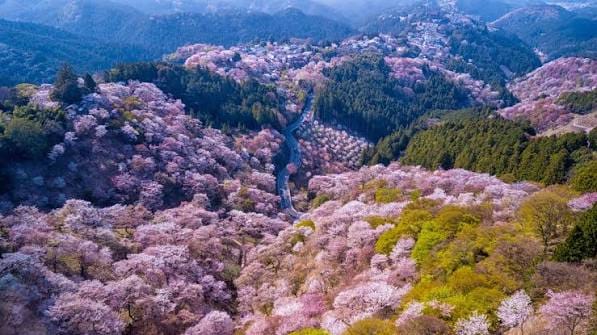
Mount Yoshino is one of Japan's most spectacular places to experience cherry blossom season on a massive scale.
Thousands of cherry trees cover the mountain slopes, creating layers of pink and white blossoms that stretch across the landscape. Because the trees grow at different elevations, the flowering period tends to progress gradually uphill instead of happening everywhere at exactly the same time.
That makes Mount Yoshino especially appealing for travelers whose dates do not perfectly line up with peak bloom elsewhere.
The mountain is also part of the Sacred Sites and Pilgrimage Routes in the Kii Mountain Range UNESCO World Heritage area. Between blossom viewing, visitors can explore temples, shrines, small streets, overlooks, and mountain scenery.
Typical viewing period: Late March to early April
Arakurayama Sengen Park, Yamanashi
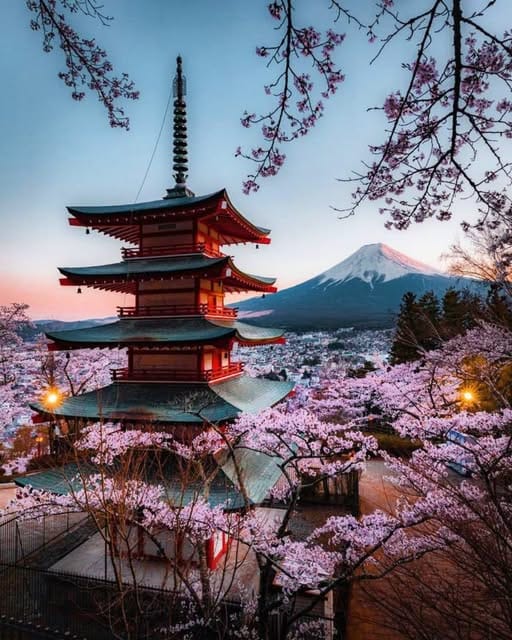
For one of Japan's most recognizable spring views, Arakurayama Sengen Park is difficult to beat.
The famous viewpoint above Fujiyoshida brings together three of the country's most iconic sights: cherry blossoms, Chureito Pagoda, and Mount Fuji.
Hundreds of Yoshino cherry trees bloom around the park, with the season generally arriving a little later than it does in Tokyo. That can make the park a great option after spending the first part of a cherry blossom trip in Tokyo or Kyoto.
The main viewpoint sits above the city and requires a climb, but the reward is one of Japan's classic postcard scenes. Going early also gives you a better chance of avoiding the biggest crowds and seeing Mount Fuji before clouds obscure the mountain.
Typical viewing period: Around mid-April
Hirosaki Park, Aomori
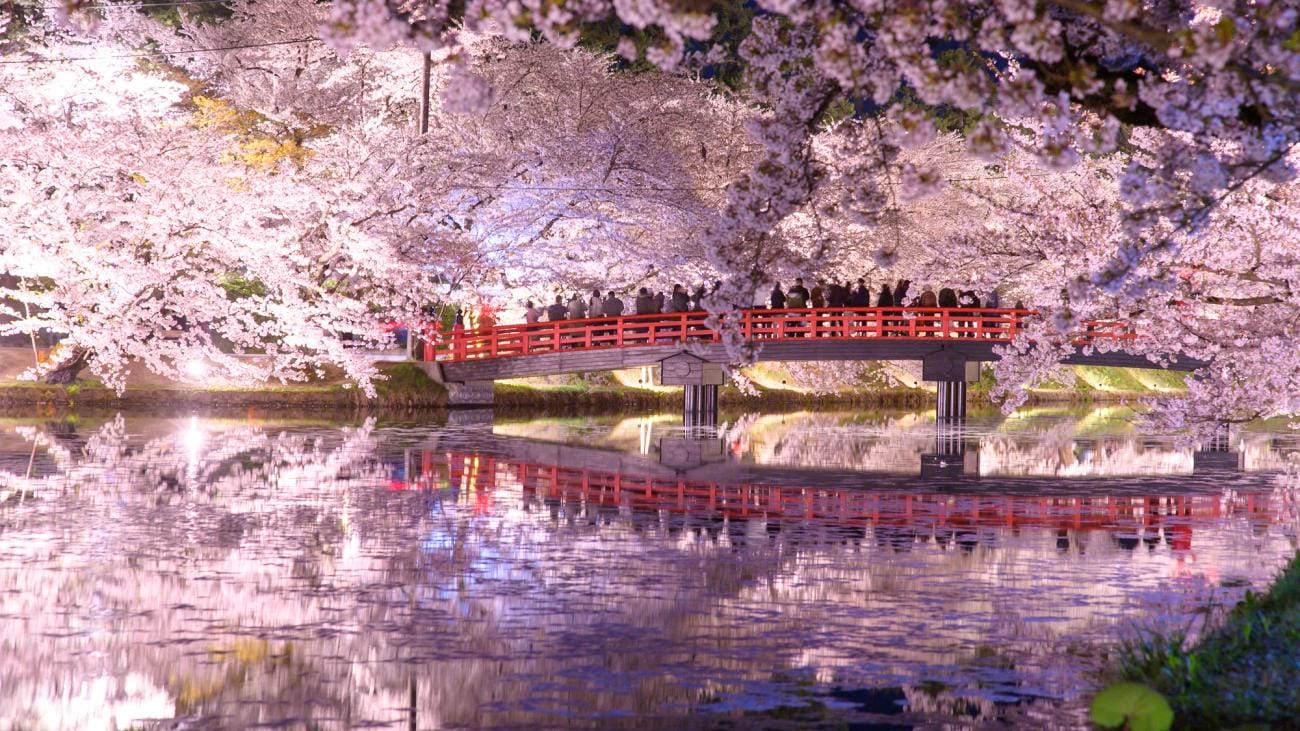
Travelers visiting Japan after peak bloom in Tokyo and Kyoto should consider heading north to Hirosaki Park.
The park contains thousands of cherry trees representing dozens of varieties, creating an especially long and impressive display around Hirosaki Castle.
One of the most memorable parts of the season arrives when petals begin falling into the castle moat. Large sections of the water can become covered in pink petals, creating the famous floating "flower raft" effect.
Bridges, illuminated trees, rowboats, castle views, and petal-covered water give visitors several completely different ways to experience the blossoms within one park.
Typical viewing period: Mid-April to early May
Himeji Castle, Hyogo
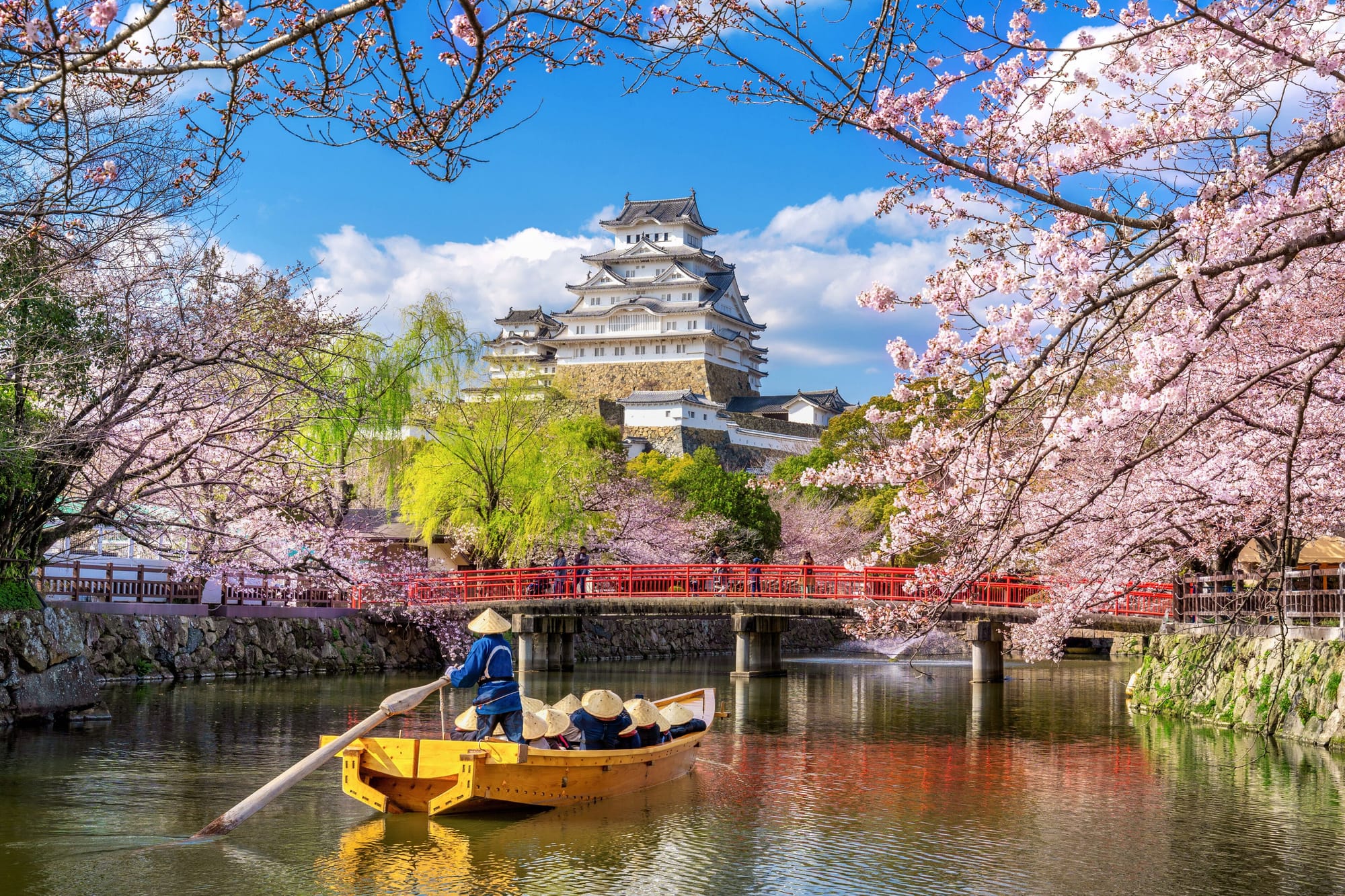
Cherry blossoms are beautiful on their own, but placing them in front of one of Japan's most famous castles makes the scenery even better.
More than a thousand cherry trees grow around Himeji Castle. During peak bloom, soft pink branches surround the castle's bright white walls and traditional rooftops.
Visitors can enjoy the blossoms from the lawns and walking paths around the castle before heading inside to explore the historic structure itself.
Himeji is also convenient for travelers staying in Osaka or Kyoto because it can easily be incorporated into a day trip by train.
Typical viewing period: Late March to early April
Philosopher's Path, Kyoto
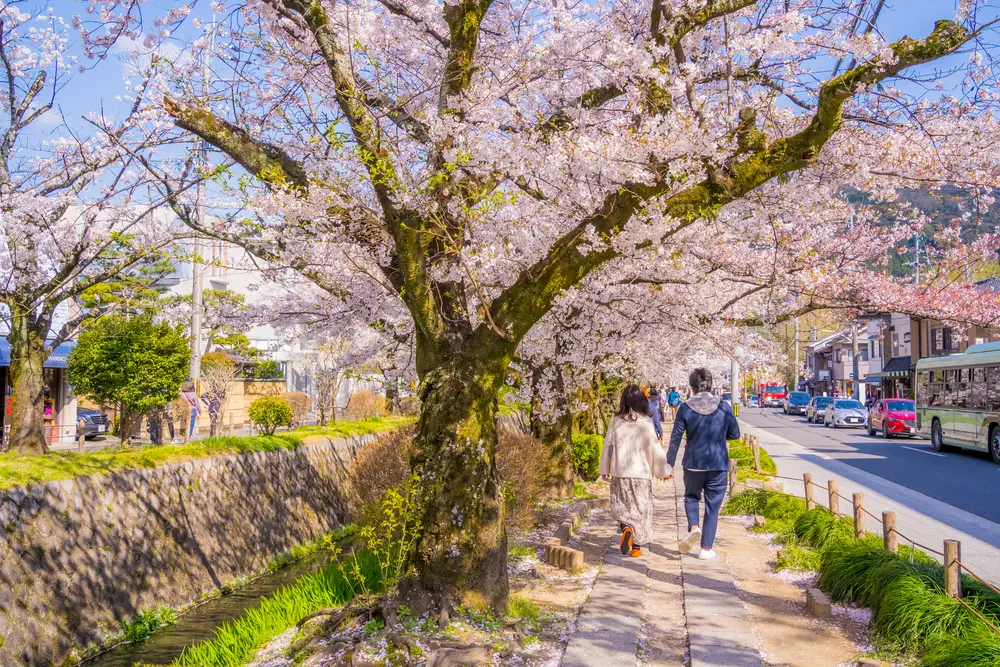
The Philosopher's Path offers a completely different cherry blossom experience from Japan's large parks and mountain viewpoints.
This peaceful pedestrian route follows a canal through eastern Kyoto, where cherry trees lean over the water and create a canopy of blossoms above portions of the walkway.
As peak bloom begins to fade, petals fall into the canal and drift along the water, so the area can remain beautiful even after the flowers start dropping.
The path is also surrounded by temples, gardens, cafes, and traditional streets, making it easy to combine sakura viewing with a full morning or afternoon of sightseeing in Kyoto.
Because it becomes extremely popular during cherry blossom season, arriving early can make for a much more relaxed walk.
Typical viewing period: Late March to early April
Maruyama Park, Kyoto
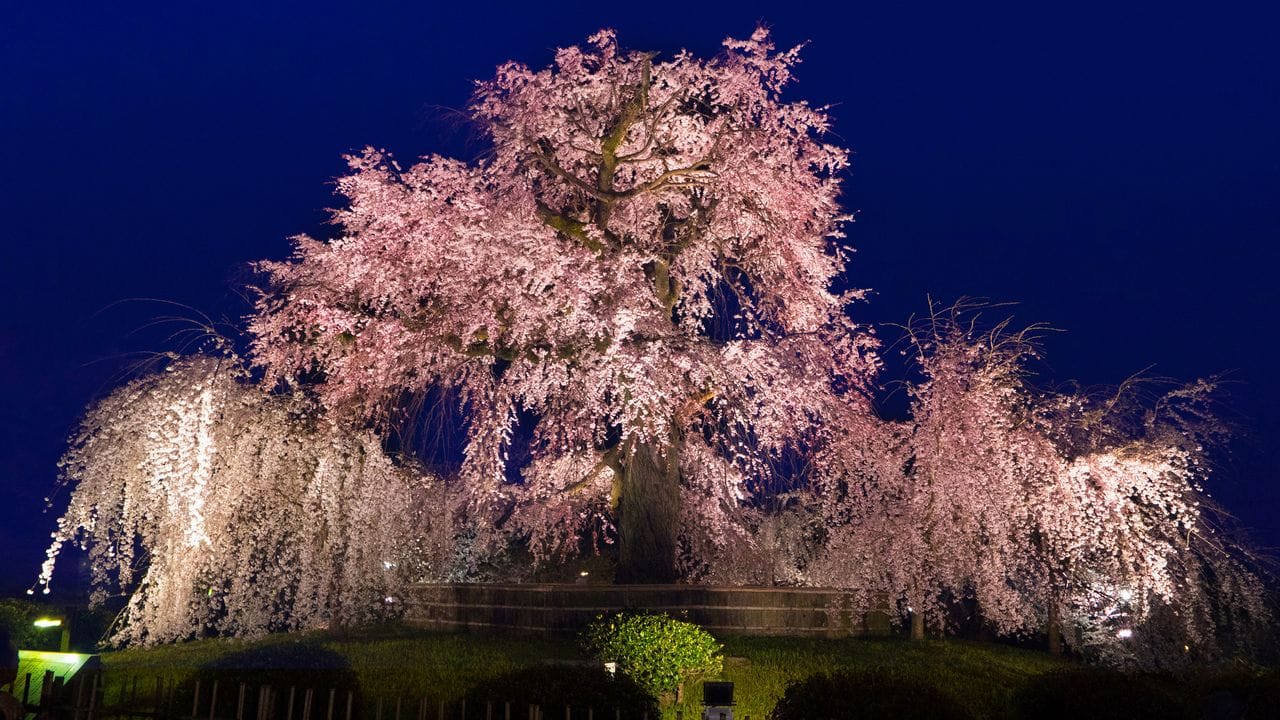
Maruyama Park is one of Kyoto's classic hanami destinations and a great choice for travelers who want more than a quick photo stop.
The park is particularly famous for its large weeping cherry tree, which becomes the centerpiece of the area during sakura season.
The atmosphere changes after sunset when seasonal lighting and lanterns illuminate the blossoms. Food stalls, picnic areas, and groups gathering beneath the trees give Maruyama Park a lively feel that is very different from quieter blossom locations around Kyoto.
Its location beside Gion also makes it easy to combine with sightseeing elsewhere in central Kyoto.
Typical viewing period: Late March to early April
Chidorigafuchi Moat, Tokyo
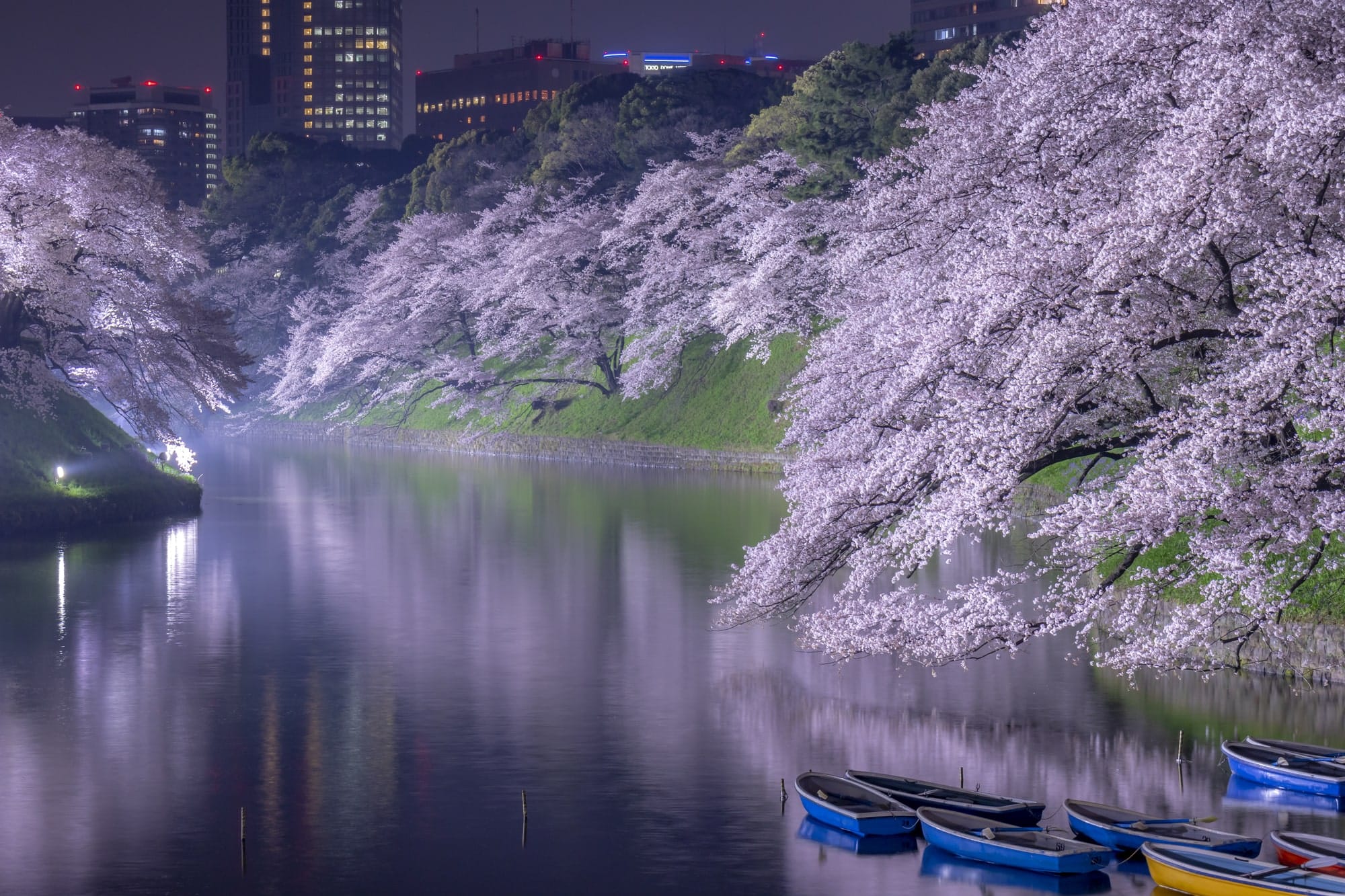
Chidorigafuchi offers one of the prettiest cherry blossom settings in central Tokyo.
Cherry trees line the moat beside the Imperial Palace grounds, with branches extending over both the walking path and water.
During peak bloom, sections of the walkway feel almost enclosed by flowers. The moat adds another dimension to the scenery as blossoms and surrounding trees reflect across the water.
One of the most popular ways to experience Chidorigafuchi is by rowboat, which places you directly beneath some of the flowering branches.
Seasonal illumination also makes this a strong choice for travelers looking for somewhere to see Tokyo's cherry blossoms after sunset.
Typical viewing period: Late March to early April
Ueno Park, Tokyo
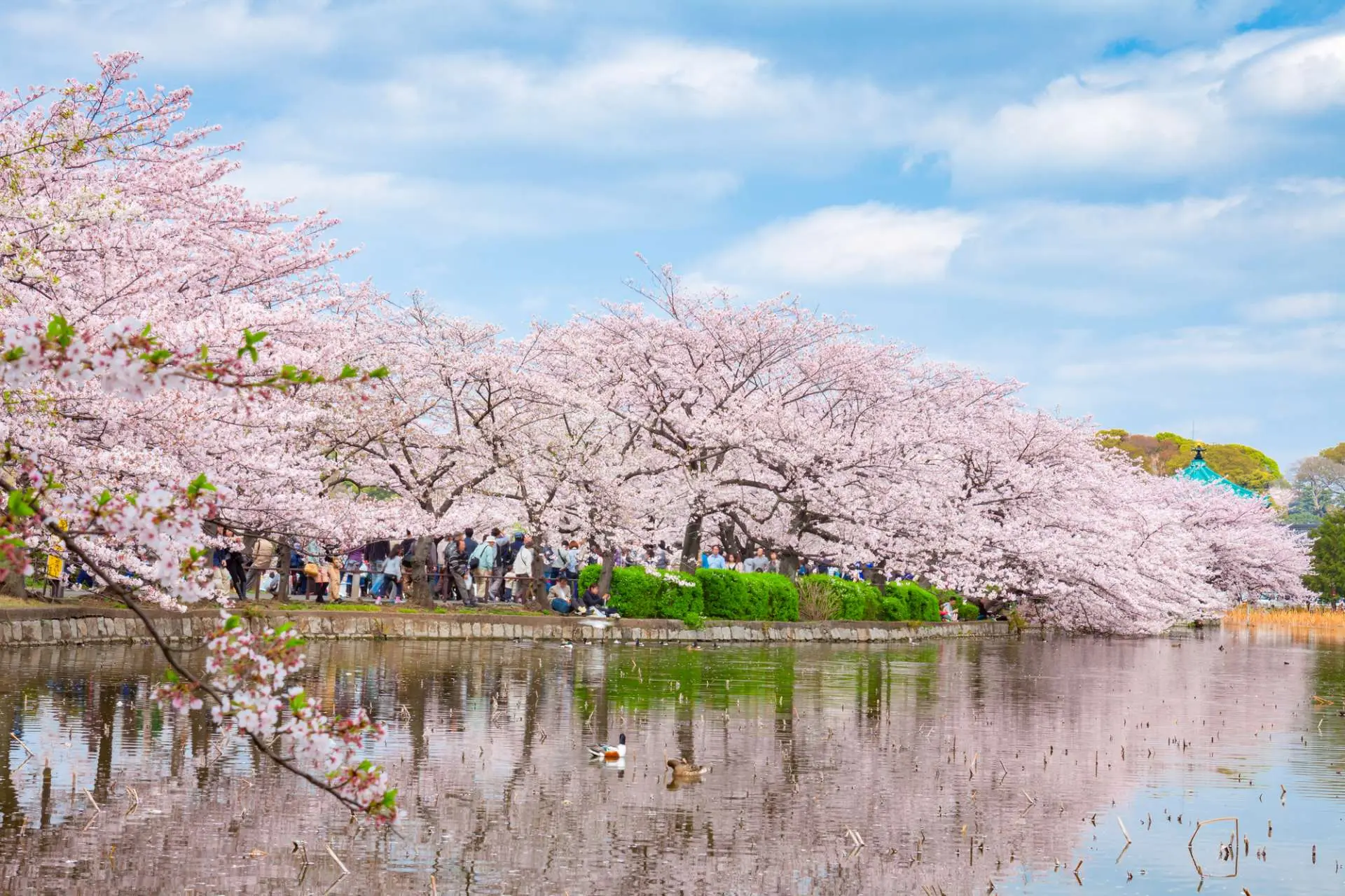
Ueno Park is one of Tokyo's most famous places to experience hanami.
Long rows of cherry trees bloom over the park's walking paths, drawing large crowds of both residents and visitors during peak season.
This is not necessarily the place to go for solitude. Instead, Ueno is about experiencing the social side of Japan's cherry blossom season, with people gathering beneath the trees and enjoying one of Tokyo's biggest annual spring traditions.
The park's central location and easy access from Ueno Station also make it simple to fit into a Tokyo sightseeing itinerary.
Typical viewing period: Late March to early April
Takato Castle Ruins Park, Nagano
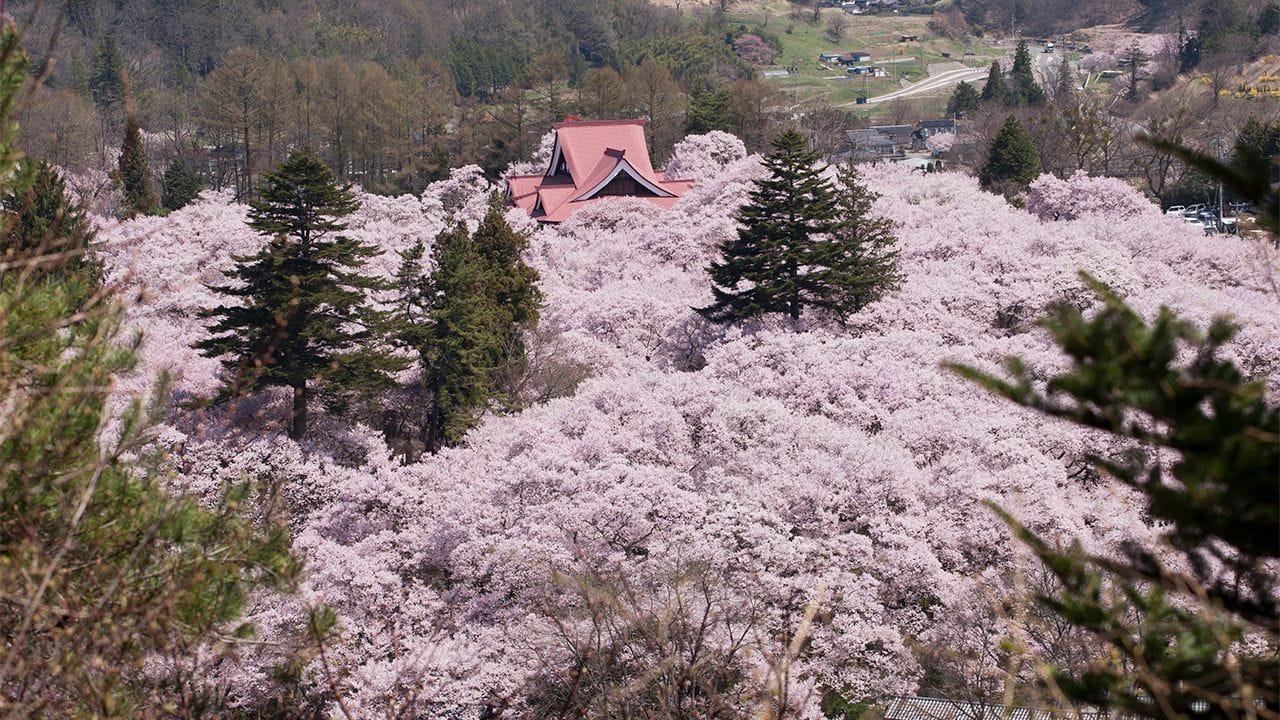
Takato Castle Ruins Park combines cherry blossoms with mountain scenery and views toward the Japanese Alps.
Around 1,500 cherry trees grow throughout the former castle grounds, including the distinctive Takato-kohigan-zakura variety known for its deep pink flowers.
The setting feels very different from blossom viewing in Tokyo or Kyoto. Mountain views, historic castle grounds, and dense clusters of flowering trees give Takato a more scenic, outdoors-focused atmosphere.
Seasonal nighttime lighting means visitors can also experience the park after dark.
Typical viewing period: Early to mid-April
Kakunodate, Akita
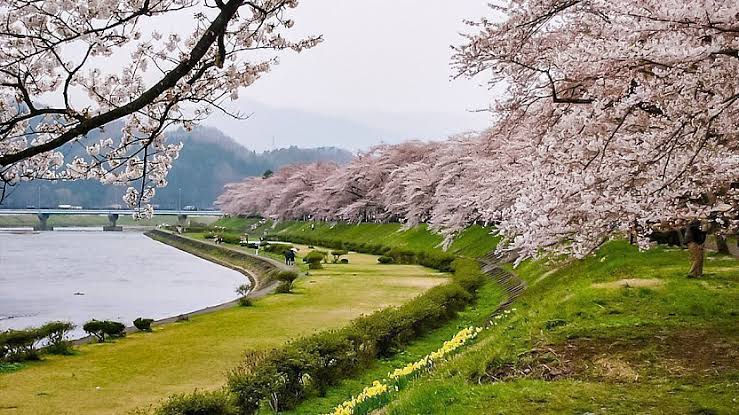
Kakunodate is one of the most distinctive cherry blossom destinations in northern Japan because the experience extends beyond a single park.
In the historic samurai district, weeping cherry trees hang above old homes, gates, walls, and narrow streets. Nearby, hundreds of cherry trees follow the Hinokinai River for roughly two kilometers.
Together, the two areas provide very different scenery: historic streets lined with blossoms in one direction and a long riverside display in the other.
Kakunodate also blooms later than Tokyo and Kyoto, making it particularly useful for travelers following the sakura season north through Japan.
Typical viewing period: Late April to early May
Goryokaku Park, Hakodate
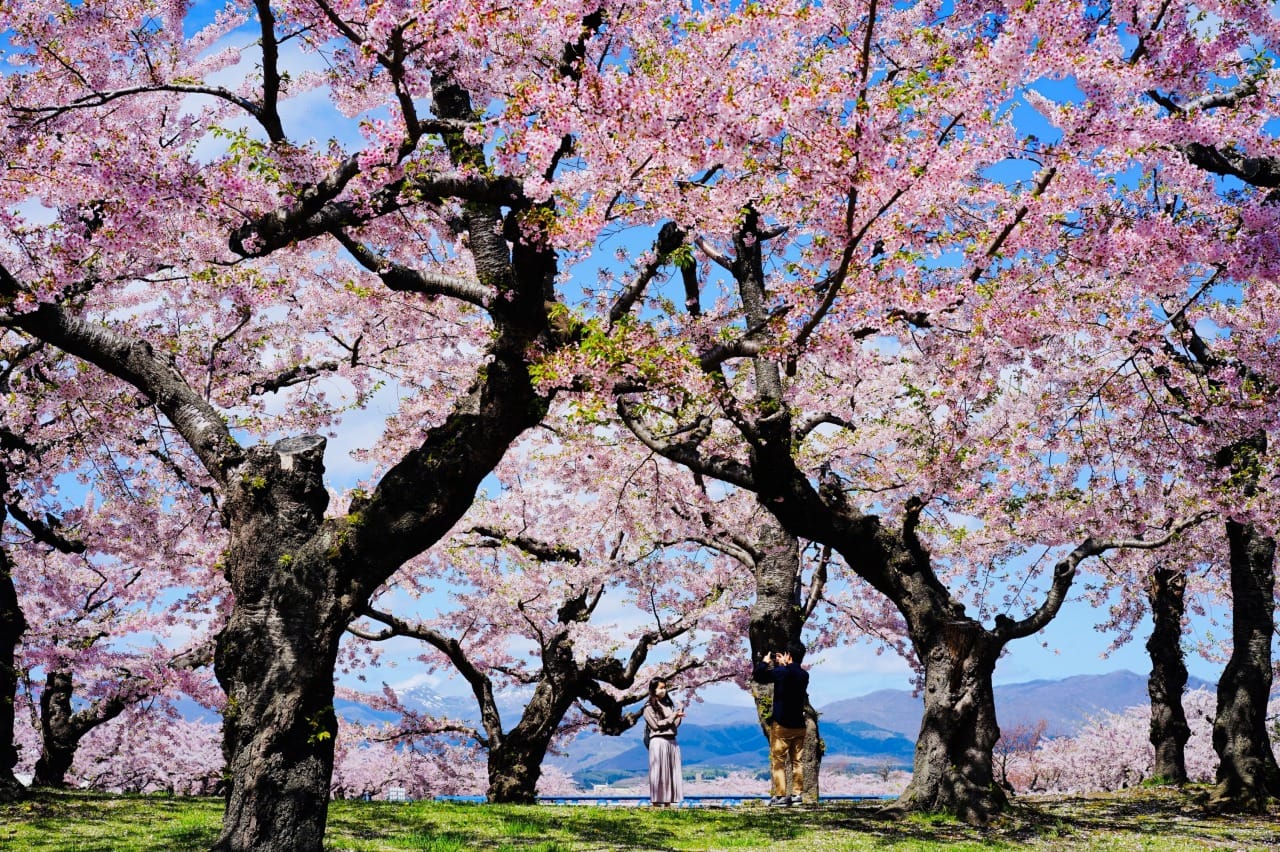
Goryokaku Park gives late-spring visitors another opportunity to see cherry blossoms after the season has ended across much of central Japan.
Thousands of blossoms surround the former star-shaped fort, creating one of Hokkaido's most recognizable spring scenes.
The best way to appreciate the unusual layout is from Goryokaku Tower. From above, you can clearly see the star-shaped moat outlined by pink cherry trees.
At ground level, visitors can walk around the moat and beneath the blossoms. Later in the season, fallen petals begin collecting on the water.
Typical viewing period: Late April to early May
Nijukken Road, Shizunai, Hokkaido
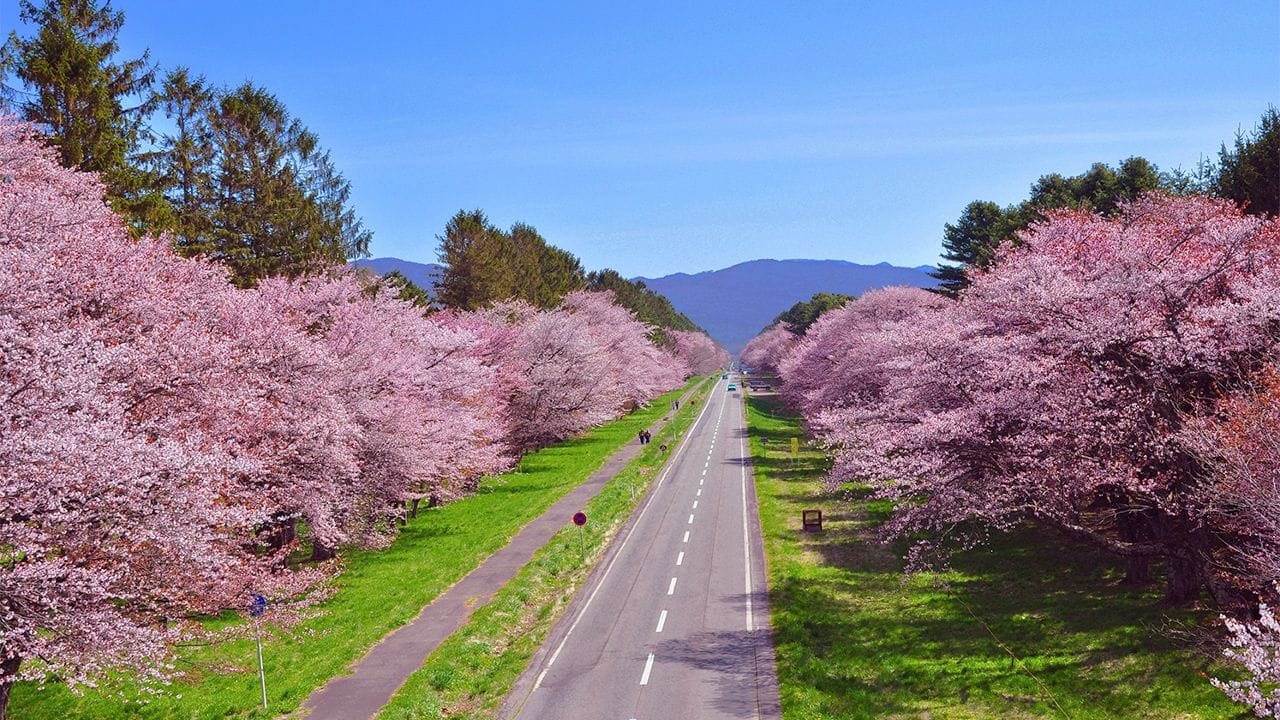
Nijukken Road offers one of the longest continuous cherry blossom displays in Japan.
Thousands of cherry trees line several kilometers of roadway through the Hokkaido countryside, creating long stretches of pink that seem to disappear toward the horizon.
Unlike the parks and temple districts of Tokyo and Kyoto, the surroundings here are open and rural. Fields and distant mountain scenery provide the backdrop instead of city buildings.
Because Hokkaido's season arrives considerably later, Nijukken Road is especially valuable for travelers visiting after cherry blossoms have disappeared from Tokyo, Kyoto, Osaka, and much of central Honshu.
Typical viewing period: Early May
Cherry blossom season is one of the most beautiful times to travel through Japan.
Each spring, sakura blooms gradually move north across the country, beginning in warmer regions before reaching northern destinations such as Aomori and Hokkaido later in the season.
That means there is no single perfect week for seeing cherry blossoms everywhere in Japan.
Tokyo and Kyoto commonly reach their best viewing periods around late March and early April, while travelers visiting later can continue north and still find impressive displays well into April and early May.
What Month Is Best for Cherry Blossoms in Japan?
For travelers visiting Japan's major tourism destinations, late March through early April generally offers the best chance of seeing cherry blossoms in places such as Tokyo, Kyoto, Osaka, Nara, and Himeji.
But Japan stretches across a large distance from south to north, so bloom periods vary considerably by location.
Visitors arriving later in April can look farther north toward Aomori and Akita. By late April and early May, destinations in Hokkaido such as Hakodate and Shizunai may still be approaching their best viewing periods.
Travelers arriving earlier can also look for early-flowering cherry varieties in warmer parts of Japan.
How Long Do Cherry Blossoms Last in Japan?
Peak cherry blossom season is relatively short.
Once an individual group of trees reaches full bloom, the best viewing conditions may only last around a week or so. Temperature, wind, rain, and the particular cherry variety can all affect how quickly flowers open and fall.
That does not mean the experience ends as soon as peak bloom passes.
Falling petals often create some of the prettiest scenes of the season, covering walking paths, floating down rivers, and turning castle moats and canals pink.
Planning a Japan Cherry Blossom Trip
The easiest way to plan around cherry blossoms is to stay flexible.
Choose your main destinations first, look at their normal bloom periods, and then monitor current forecasts as your travel dates approach. If the flowers arrive earlier or later than expected, Japan's north-to-south geography often gives you other options.
For travelers combining cherry blossom viewing with a larger trip around the country, this 14-day Japan itinerary covers Tokyo, the Mount Fuji area, Kyoto, Osaka, and Hiroshima and can help you start putting the rest of your route together.
Whether you want mountains covered in blossoms, pink trees surrounding a Japanese castle, quiet canal walks, or late-season sakura in Hokkaido, Japan has enough variety to build an entire spring trip around cherry blossom season.
 Jetsetter Alerts
 Sara Miller